




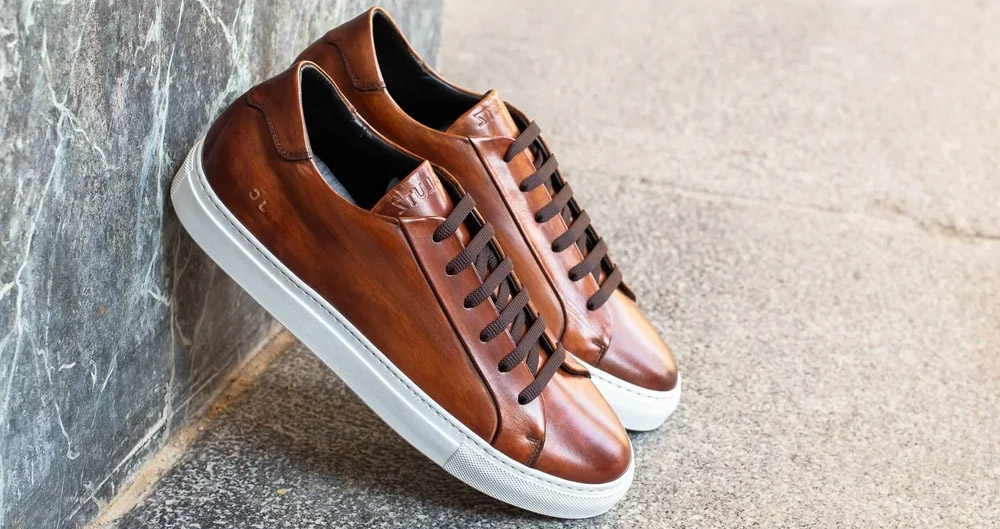
A Sneaker You Design Yourself: How A Made-to-Order Leather Sneaker Is Built In Italy
Every panel is a choice. Then a workshop in Le Marche takes about two weeks to make it.
Most sneakers are finished long before anyone picks them. They are designed a season ahead, produced in the thousands and parked in a warehouse until the right size finds the right buyer. Customization, when it exists, usually means choosing a colorway someone else already approved.
Made-to-order flips that sequence. The design comes first, the order second, and only then does anyone cut leather. It is a slower way to get a pair of sneakers, and that is exactly the point.
The Shoe Starts as a Set of Parts
A leather sneaker is a small puzzle of panels: the vamp and tongue up front, the lace guards on either side of the eyelets, the outer vamp, the backstay at the heel. On a mass-produced pair, those pieces arrive pre-decided. On a made-to-order pair, each one is a decision.
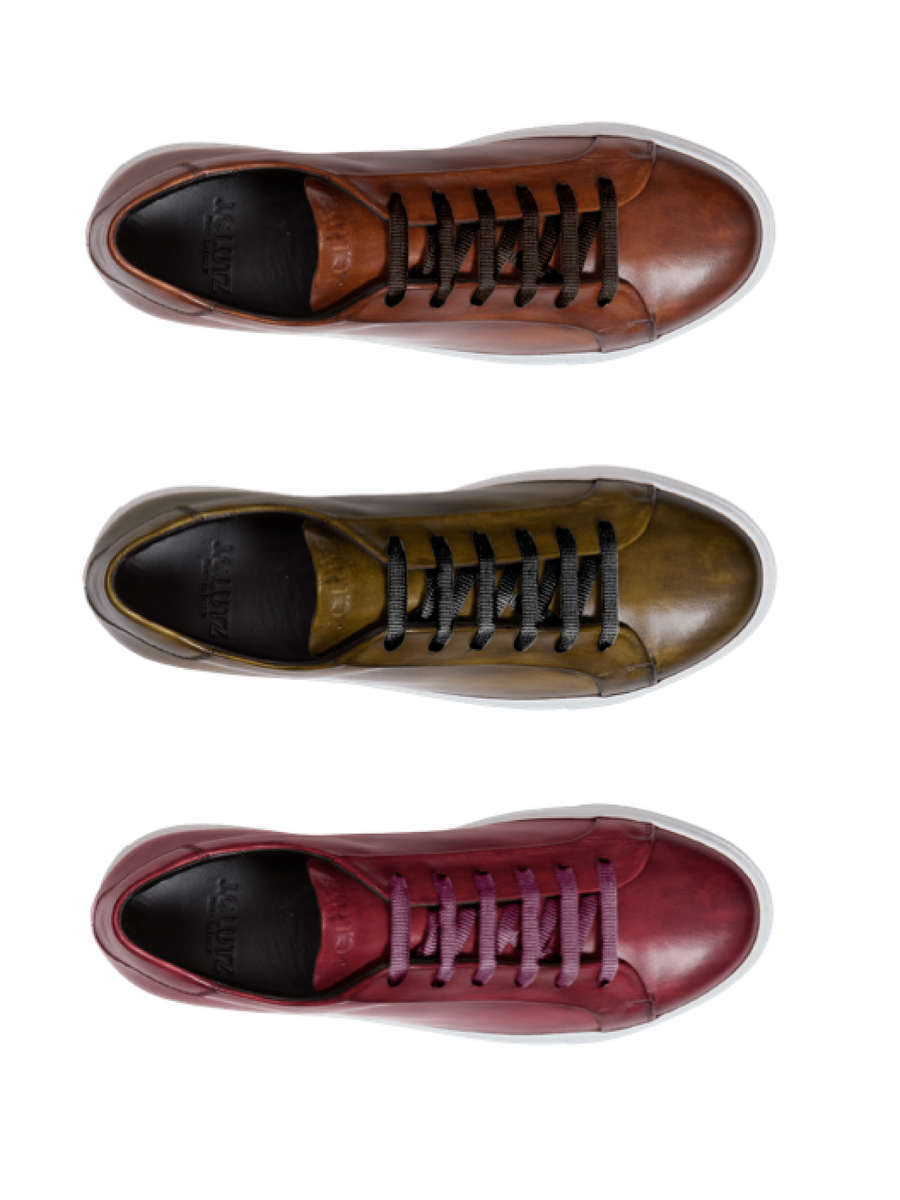
J.C.LUTZ, a brand born in Paris that makes its sneakers in Italy, breaks the shoe down exactly this way in its online configurator. Sole, laces, lining, backstay, vamp and tongue, lace guards, stitching and outer vamp are set one by one, and every leather panel can be cut from calf, suede or full grain. Colors come from a curated palette rather than an open color wheel, which rewards restraint over novelty. The lining alone comes in white, black or brown. For anyone who would rather edit than start from zero, ready-made configurations can be loaded into the design tool and adjusted from there.
The leather choice changes more than the look. Calf is top-grain leather with a surface corrected to an even finish, the cleanest canvas for a solid-color shoe. Suede is worked from the underside of the hide and reads softer. The full-grain option is vegetable-tanned and hand-painted at the atelier, so its color goes on by hand in the workshop.
Customization stops at the last, the form the shoe is built around. Every pair uses a last selected for balanced comfort across extended wear, rather than one shaped for an individual foot. This is made-to-order, not bespoke, and the distinction matters: the buyer designs the sneaker, the atelier decides how it is built.
Two Weeks in Le Marche
Once a design is confirmed, it goes to a family-run atelier in Le Marche, the region on Italy's Adriatic coast with a shoemaking tradition that goes back generations. Every step, from cutting the leather to boxing the finished pair, happens in that one workshop. The leathers come from Italy, bought from a supplier certified under EU REACH and by the Leather Working Group.
Cutting is done by hand. Each panel is cut from the hide after an inspection for fiber direction and surface consistency, so the cutter can work around flaws instead of through them.
Then comes the part that never shows up in a product shot. Under the removable footbed sits a cowhide midsole rather than a synthetic filler, with a metal shank set inside it: standard in every pair, somewhat common in dress shoes and almost impossible to find in sneakers. The rubber cupsole is stitched to the upper instead of relying on adhesive alone. Panel edges are hidden-stitched with the lining, and the lace guards are stitched invisibly to the vamp, which keeps the outside of the shoe clean.
Crafting takes about two weeks. Every pair is reviewed before it leaves the atelier and ships directly from there, with delivery aimed at around three weeks from the order.
Waiting as Part of the Design
Speed has been the sneaker world's default for a while: surprise drops, instant restocks, even 3D-printed slides produced straight from a digital file. A made-to-order leather sneaker runs on a different clock. It cannot be bought on impulse, and because it is built for one person, it is not something to order on a whim and send back.
What the wait buys is a pair that did not exist until someone asked for it. There is no warehouse stock behind it, and the brand presents producing only to order as a way to avoid mass production and the waste that comes with it.
Sneaker culture has spent years celebrating the release. The made-to-order pair celebrates the decision instead: which leather, which lining, which stitching, and when to stop.









 Connect with Facebook