




Lena Keller's False Skies Asks Us to Look Again
Perception, memory and the digital ways we experience the natural world.
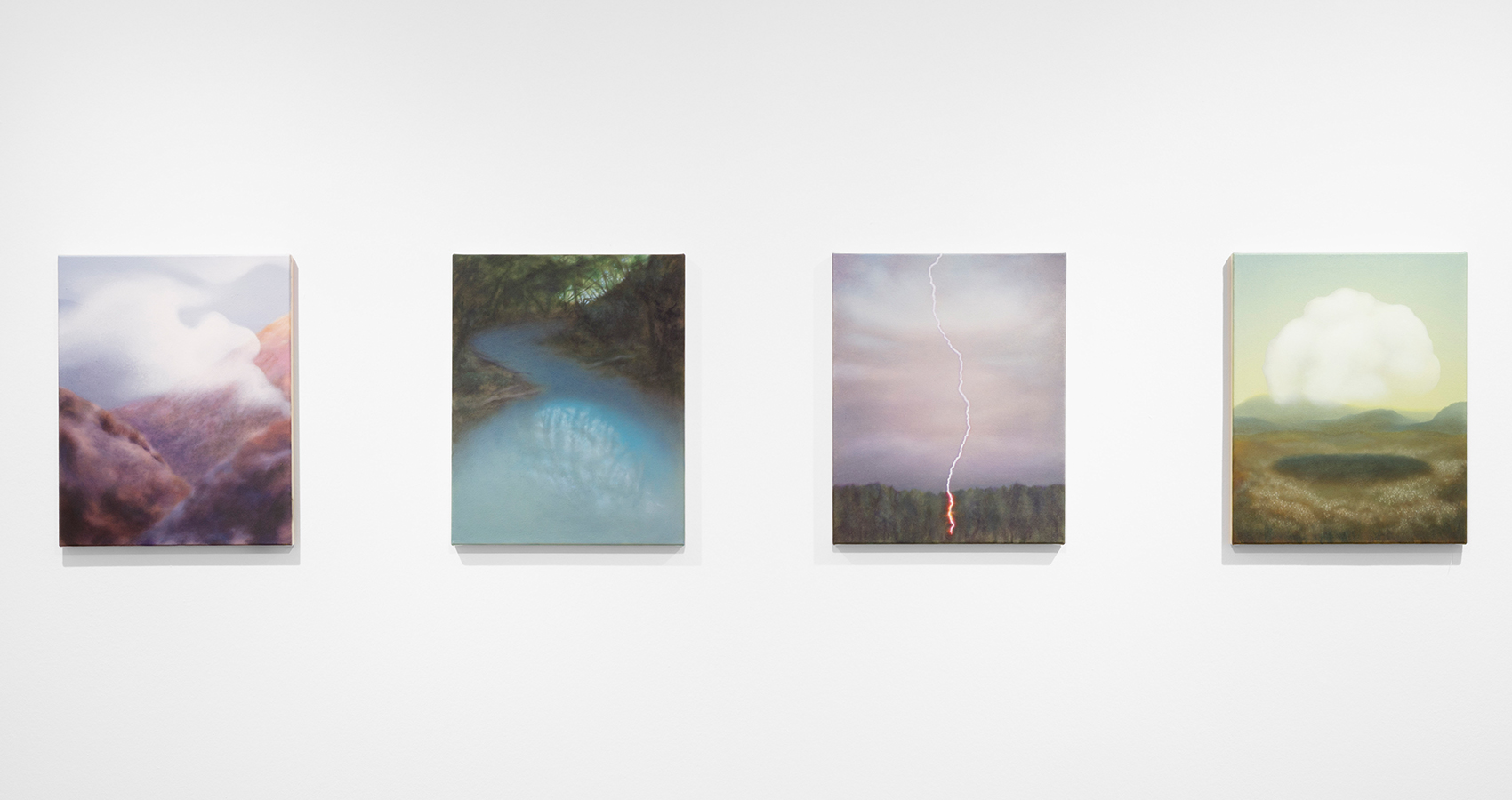
In a world where images are endlessly produced, edited and consumed, what does it mean to really look at something? For painter Lena Keller, the answer begins with questioning the reliability of our own eyes. Her new exhibition, False Skies, at Kornfeld Galerie Berlin explores the shifting relationship between perception, memory and the increasingly digital ways we experience the natural world.
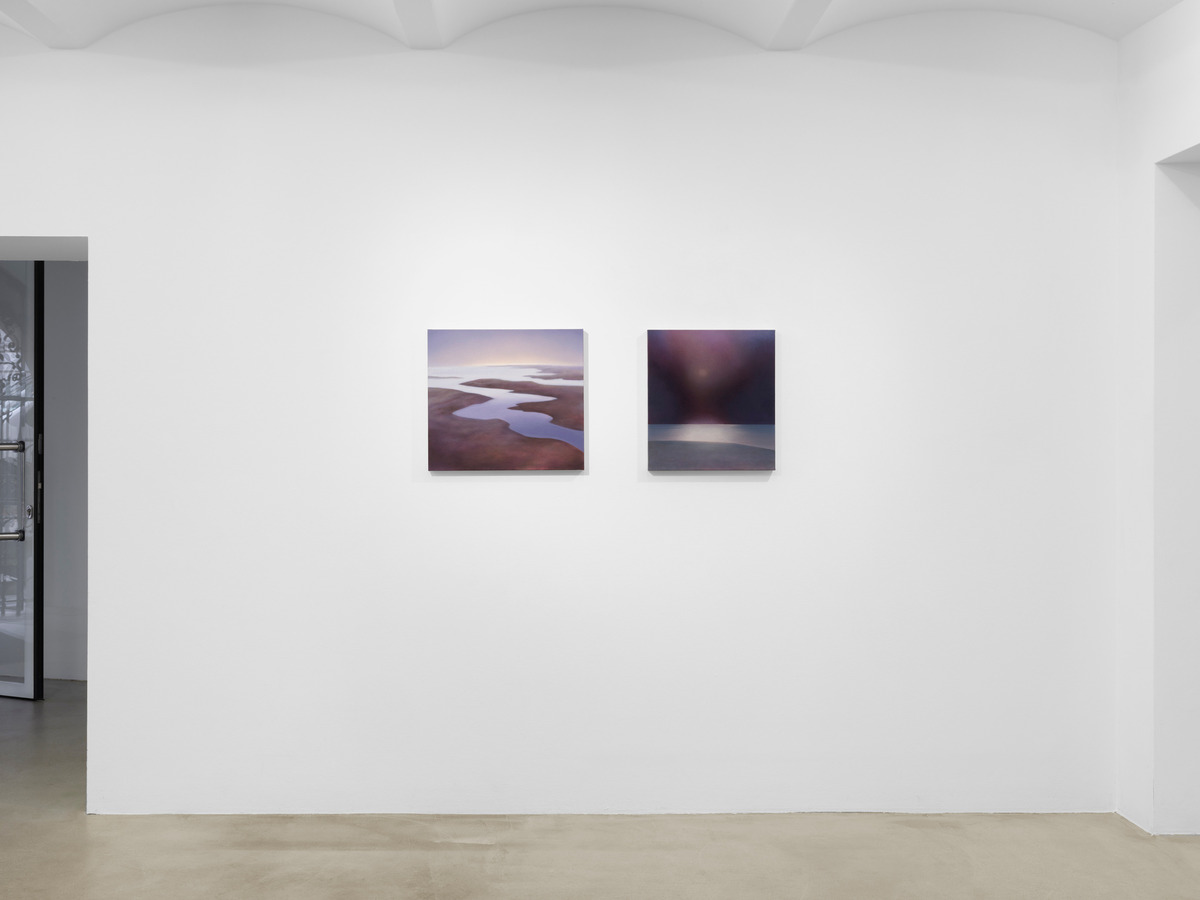
Opening on October 30, 2026, the solo exhibition presents landscapes that appear familiar at first glance but gradually resist easy interpretation. Horizons dissolve into color, clouds become ambiguous forms and reflections seem to slip between recognizable objects and pure light. These are not straightforward depictions of places, but constructed visual experiences that invite viewers to reconsider how they see.
When a Landscape Becomes Something Else
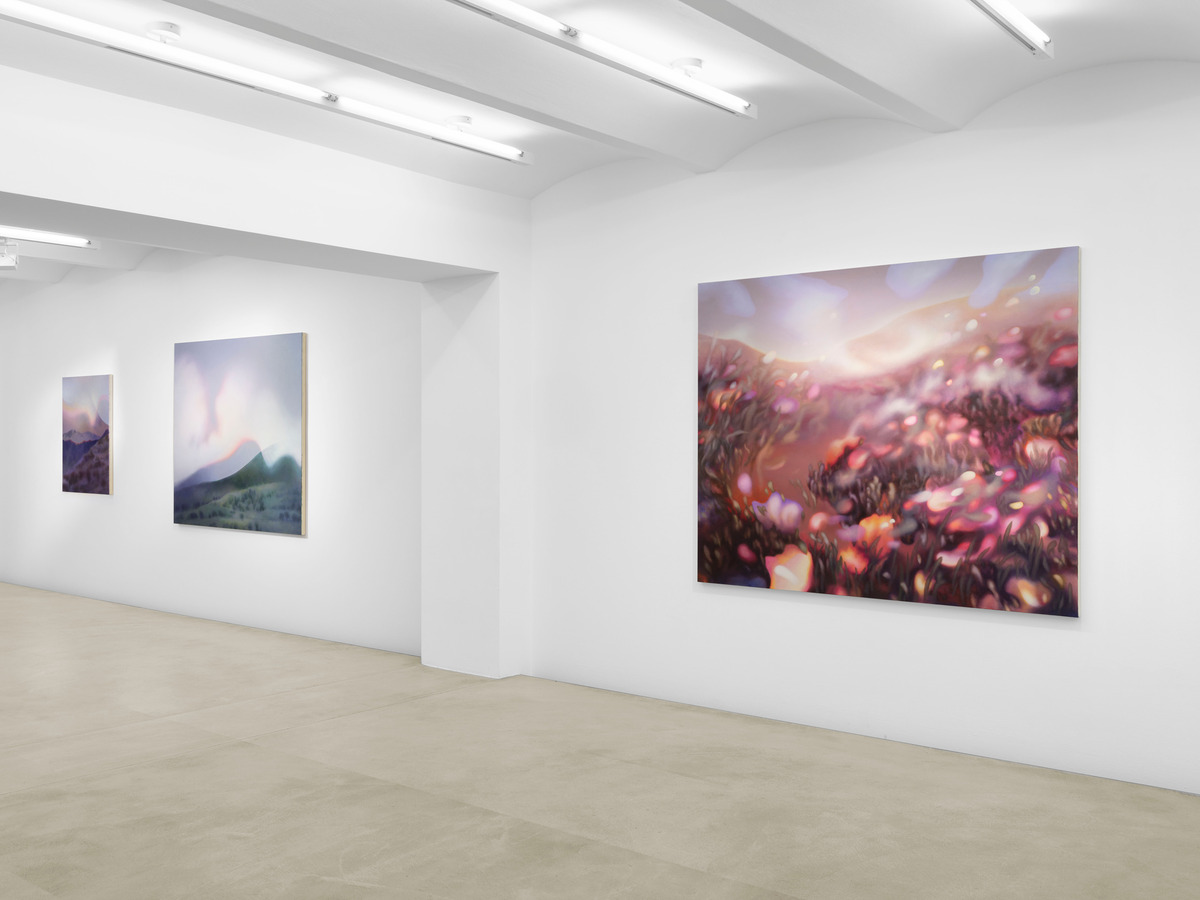
Keller's interest in perception has long informed her painting practice. Rather than treating landscape as a fixed subject to be reproduced, she is interested in how we form an image of the world through our own experiences, memories and expectations.
This becomes particularly apparent in The Verge, where a seemingly straightforward landscape begins to reveal its uncertainty. At first glance, the viewer might recognize rolling hills beneath a band of clouds. Look more closely, however, and the relationship between the two becomes less certain. The cloud formation might describe a hill, or it might simply frame the sky.
The painting itself remains unchanged. What shifts is the viewer's interpretation.
Keller is drawn to precisely this moment, when an image suddenly becomes painting, or when painting seems to turn back into an image. Rather than offering a definitive answer, she wants to encourage new perspectives and make us aware of our own habits of looking.
The Digital World, Made Tangible
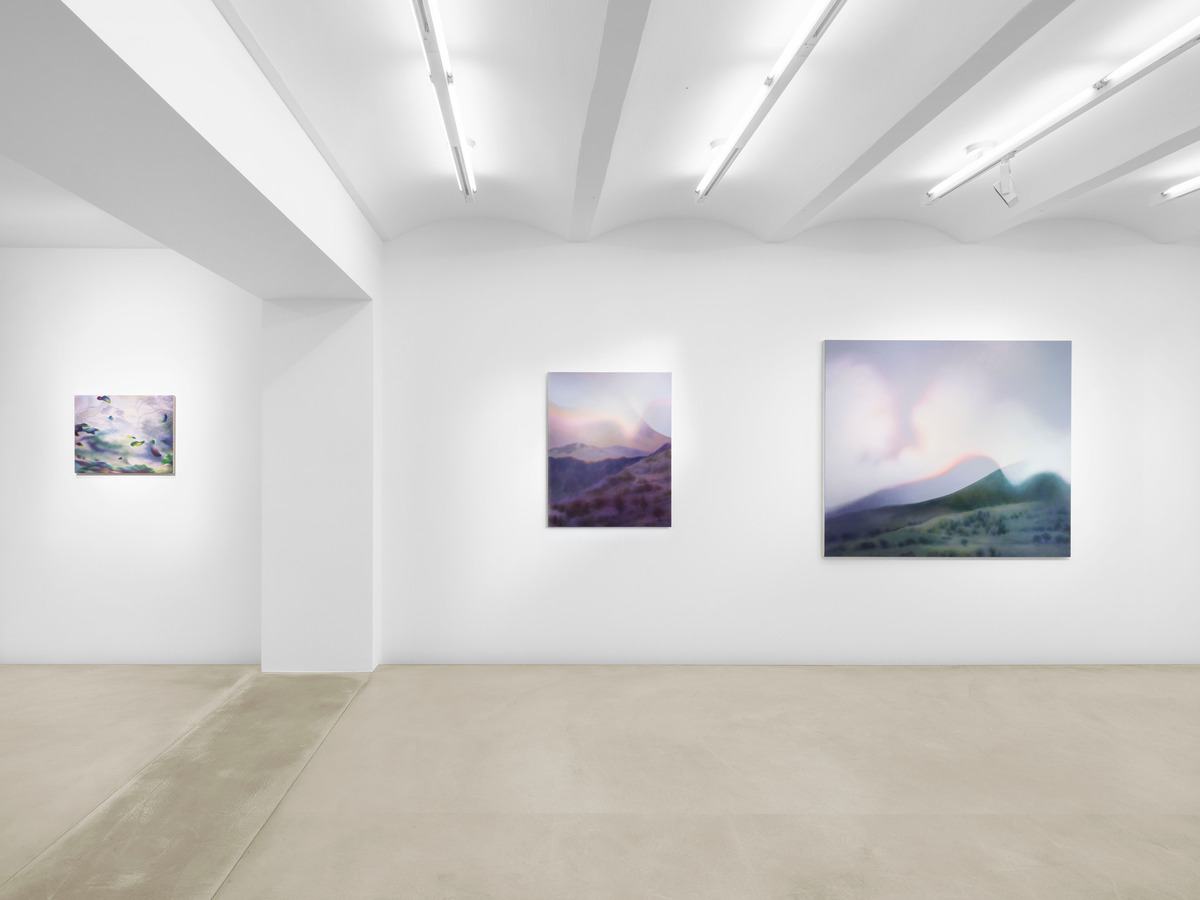
Although Keller's finished works are oil paintings, their beginnings are often digital. She develops preliminary studies through manipulated photographic collages, using filters, smoothing, distortion, overexposure and glitches to transform the original imagery.
Moving these compositions from a digital environment onto canvas introduces an entirely different physical dimension. What begins as something fleeting and immaterial becomes tangible through the materiality of oil paint.
For Keller, this transformation is closely connected to how we experience nature today. Our understanding of landscapes is no longer shaped exclusively by direct encounters with the natural world. Photographs, screens and digital imagery increasingly influence what we recognize as beautiful, familiar or real.
She describes this as an ongoing visual modulation of our relationship with nature. We do not see only with our eyes, but also through our conditioning, memories and longings. Her paintings attempt to develop a visual reality that feels internally coherent while carrying the unmistakable imprint of the present moment.
A Different Kind of Looking
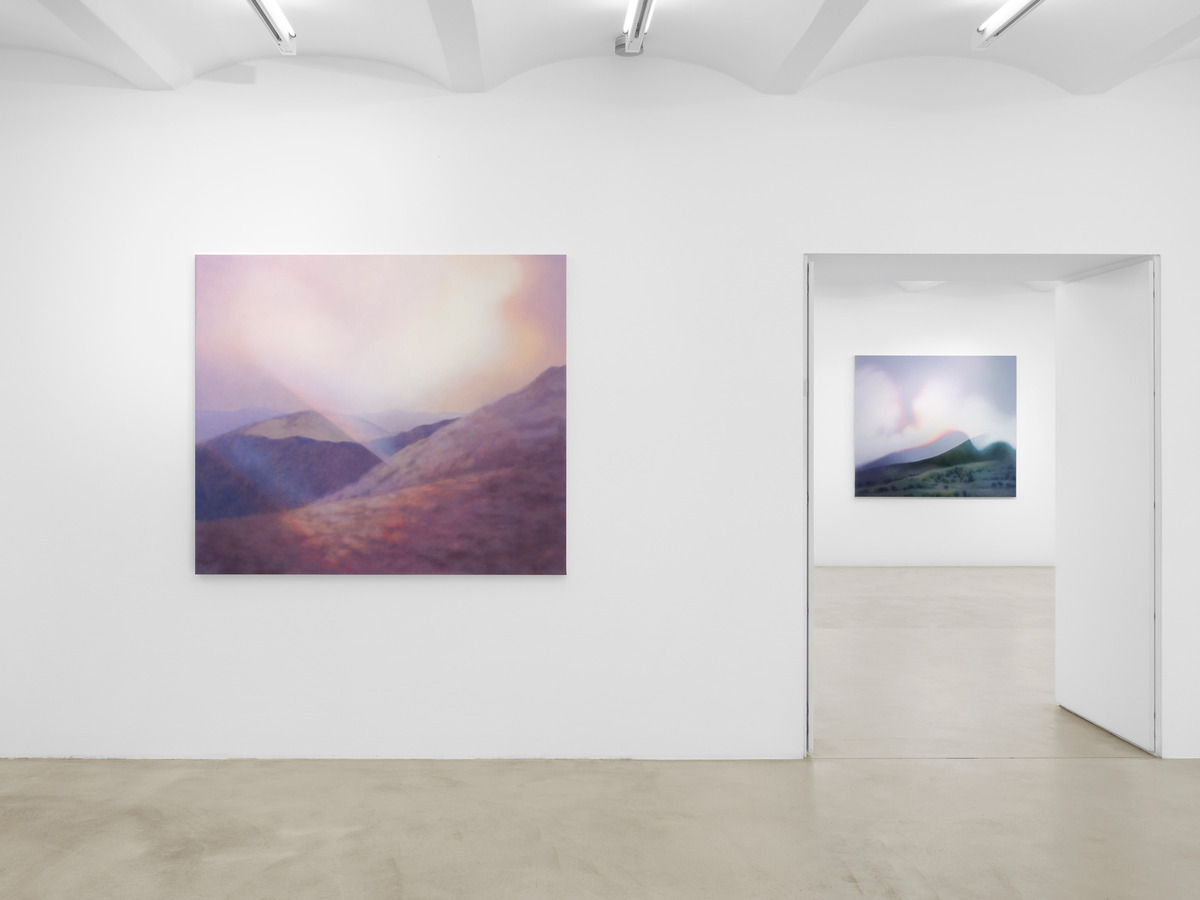
In an environment where images are constantly available, conscious observation can feel increasingly precious. Keller sees painting as offering something distinct from the immediacy of a photograph or screen: an experience that changes according to how long we spend with it.
A painting carries traces of the time involved in its creation. Its surface records decisions, adjustments and responses to the developing image. For Keller, this process cannot be entirely planned. Each new layer of oil paint creates a conversation with what is already on the canvas, allowing unexpected developments to influence the final composition.
She compares the experience of encountering painting to reading poetry. Its meaning is not communicated purely through intellectual understanding; it has to be experienced. Looking becomes a physical, subjective process shaped by attention and duration.
This is also why Keller does not simply attempt to preserve a fleeting impression of a particular landscape. She paints her personal visual experience, allowing it to extend beyond a specific place or moment. The digital transformations introduced in her preliminary studies become part of that experience, translated into something viewers can encounter through the physical surface of the canvas.
False Skies, New Perspectives
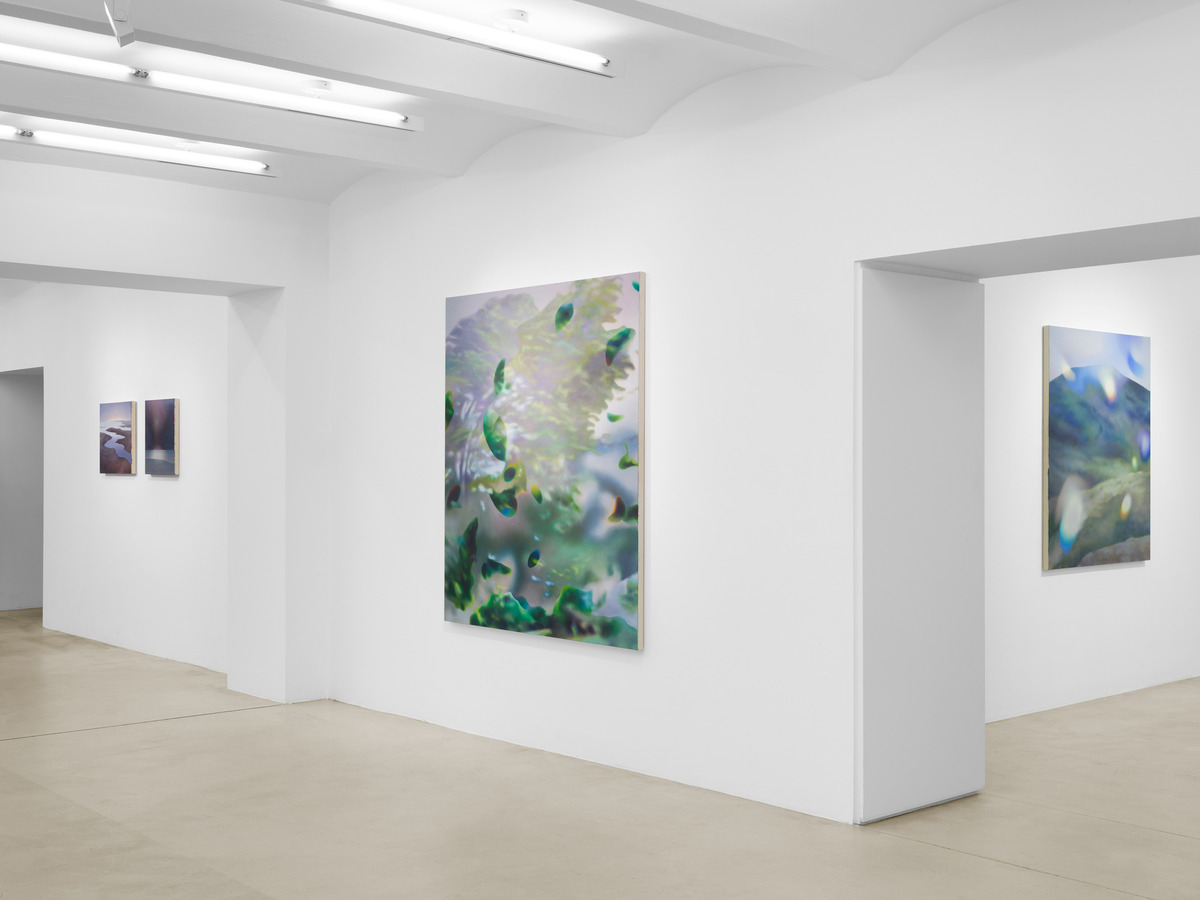
The title False Skies suggests an uncertainty that runs throughout the exhibition. These landscapes may initially resemble places we recognize, but their compositions resist the expectation that seeing necessarily leads to understanding.
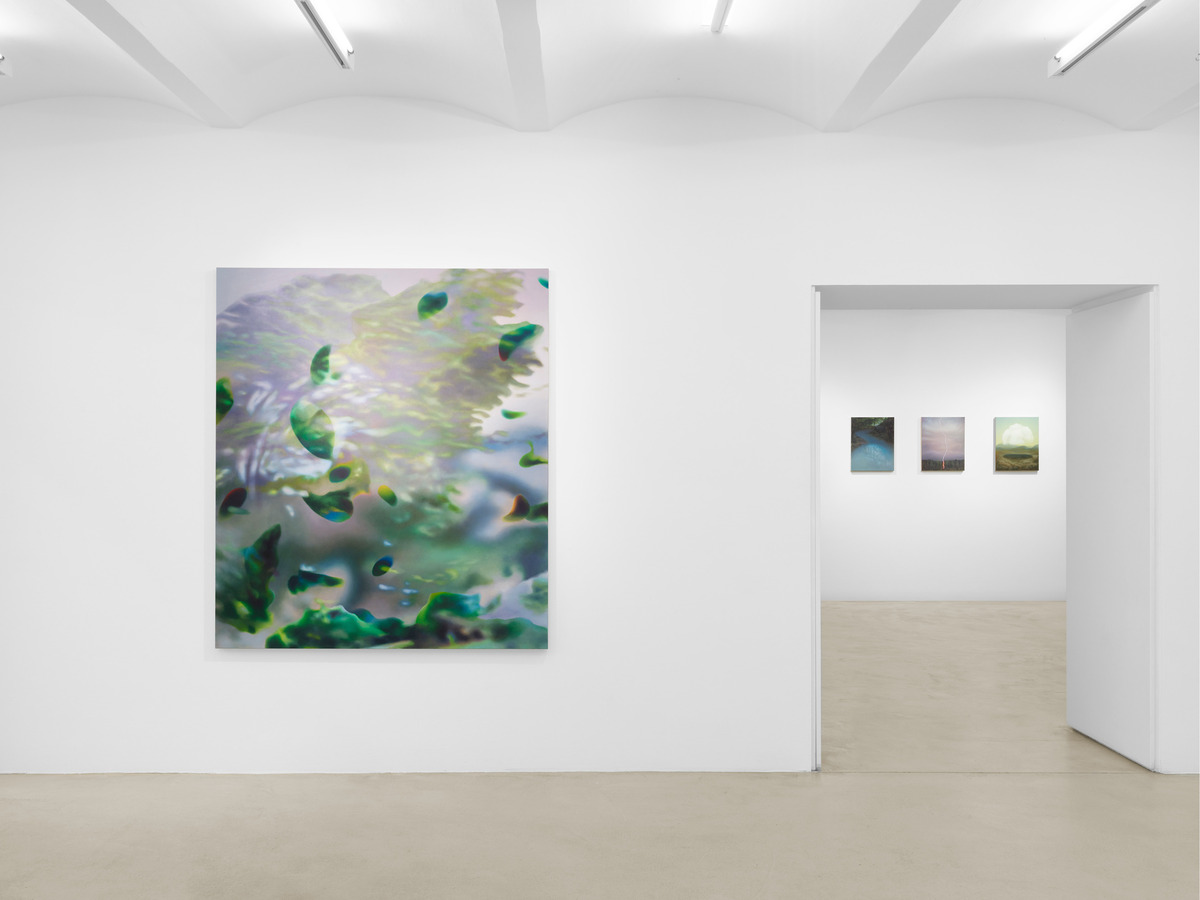
Keller is not interested in painting as a means of capturing certainty. Instead, she creates images that encourage viewers to question what they think they recognize and become more attentive to the act of looking itself.
In that sense, False Skies offers a quiet counterpoint to the endless circulation of digital imagery. Rather than demanding an immediate reaction, the paintings ask for time. Their landscapes are not simply somewhere to look, but somewhere to reconsider how looking works.
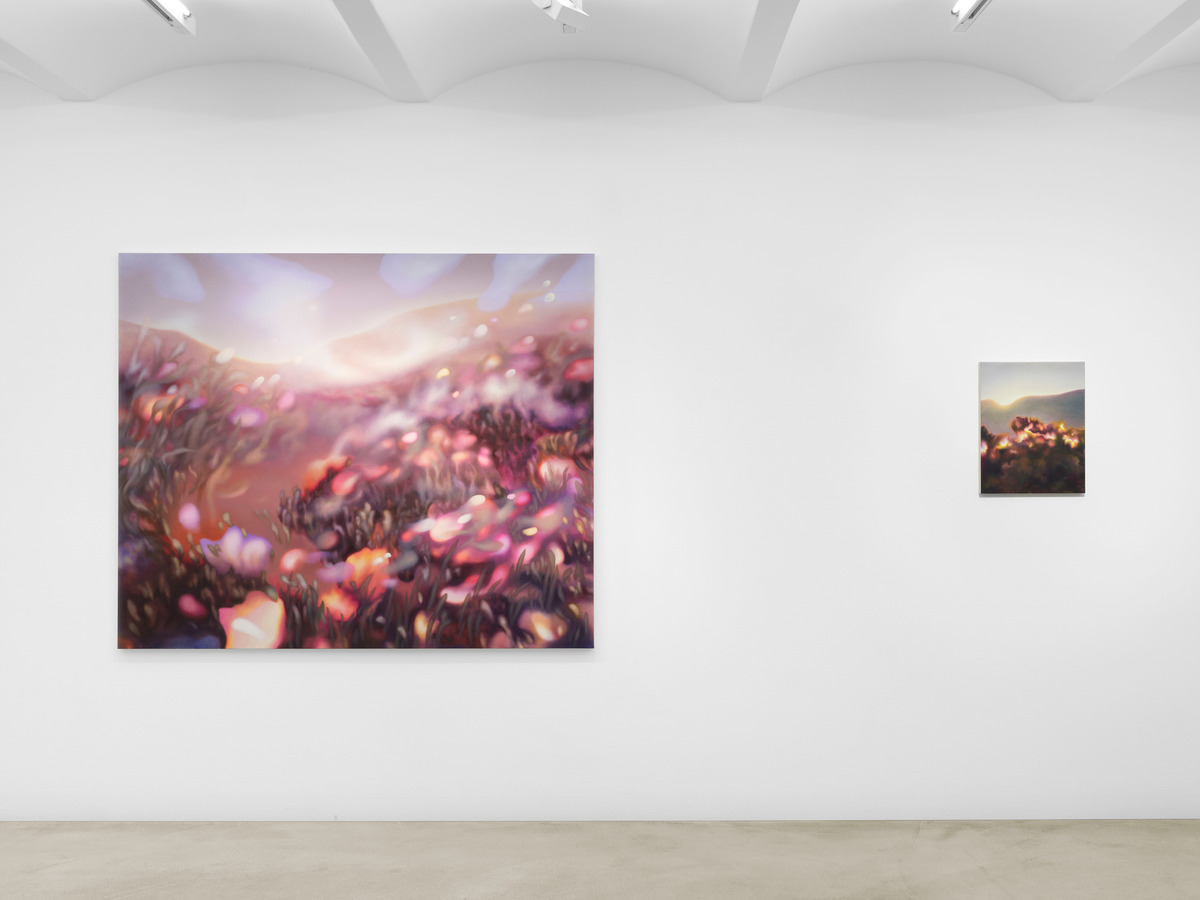
At a moment when so much of our visual experience is mediated by screens, Keller brings the image back into the physical world, reminding us that seeing is never quite as simple as it seems.









 Connect with Facebook