




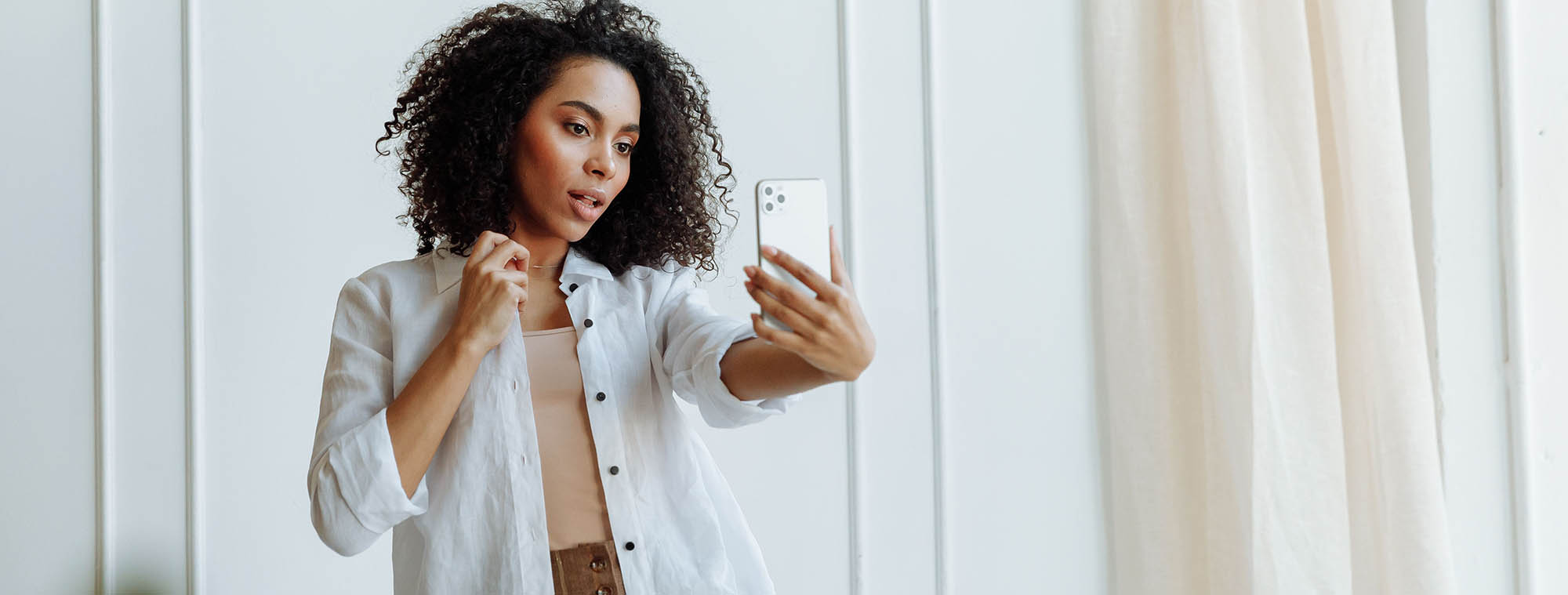
How To Create Better Dating Profile Photos Through Clothing Choices
What you wear can make or break a dating profile photo.
You are standing in a kitchen at 7pm, holding a phone at arm's length, wearing the shirt that gets compliments every time you leave the house. The photograph comes back wrong. The fine check across the chest has turned into a shimmering rainbow, the color has drifted toward orange under the ceiling bulb, and the whole thing looks cheaper than the shirt cost. A small sensor, a wide lens and a warm light do that to cloth. The garment that works across a restaurant table can fail completely inside a 1,200 pixel square, and most people blame the photograph.
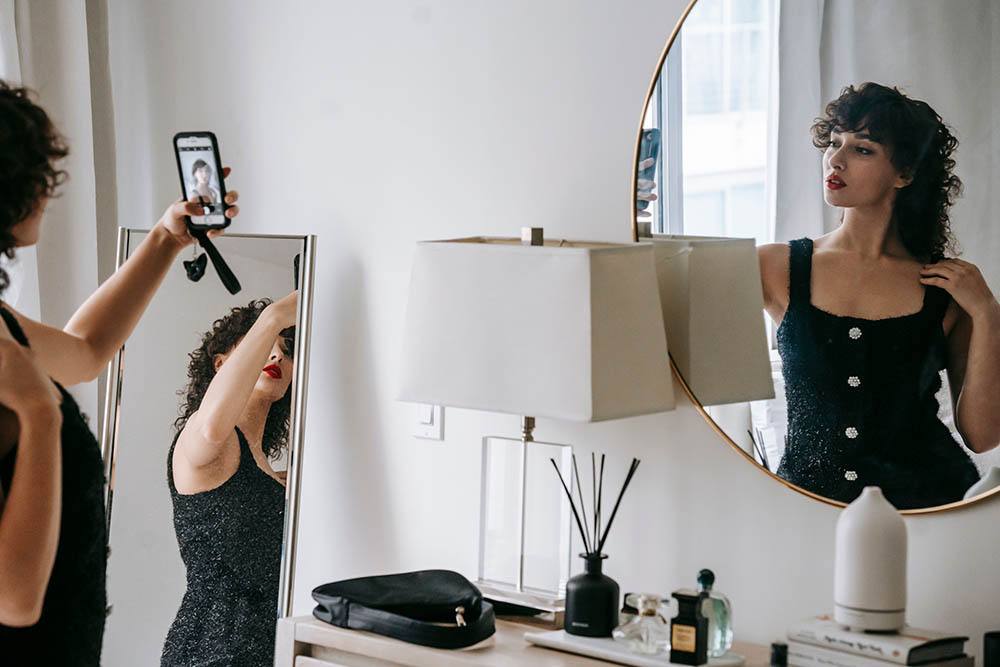
Phone Cameras and Fabric
A camera and an eye see cloth differently. The eye adjusts continuously for light temperature, moves around the garment, and builds an impression from several seconds of looking. A phone takes one exposure, applies a single white balance guess to the entire frame, and compresses the result into a file small enough to upload in a second.
Three properties of a fabric decide how that goes. Weave density controls how much texture survives compression, sheen controls how much light the garment throws straight back into the lens, and drape controls how the cloth describes a shoulder or hangs loose from it.
Matte, mid-weight fabrics come through best. Merino, brushed cotton, flannel, heavier linen and unpolished wool all hold their texture at small sizes and none of them throw light back at the camera. Thin polyester, satin, velvet and anything with a plastic finish create bright hot spots wherever the light lands, and those spots pull a viewer's eye away from the face every time.
Weight is the property men underestimate. A heavy oxford holds a collar open at the right angle for hours. A thin one folds against the neck within about ten minutes of wearing it, and every photograph after that has a collapsed collar in the middle of the frame. The same applies to a knit that stretches at the shoulder seam and a jacket lining thin enough to show the outline of a phone in an inside pocket.
Audience Differences Across Relationship Types
The same photograph does not travel equally across every kind of connection a person is looking for. A profile aimed at a long marriage leans on warmth and a relaxed collar. A profile on a sugar baby website or another age-gap platform tends toward a cleaner and more composed frame, because the people looking there have already settled the question of what kind of relationship they want.
Neither version needs a studio, and both fail on the same technical point. Cloth that looks deliberate in a room can look accidental through a lens, which removes movement, depth and context.
Fine Patterns and Sensor Interference
The rainbow effect on the checked shirt has a name and a cause. A camera sensor is a grid of photosites. A woven fabric is a grid of threads. When the two grids have similar spacing and a slight misalignment, they produce a third pattern that exists in neither of them.
This is ordinary optical interference, the same phenomenon that makes two overlapping window screens produce moving bands. On a garment it appears as wavy lines and false color, usually magenta and green, across the area where the pattern is tightest. Pinstripes, houndstooth, fine gingham, herringbone and tweed are the reliable offenders.
Camera makers used to fight this with a filter that blurred the image very slightly before it reached the sensor. Removing that low-pass filter gives sharper detail and costs some protection against the effect, which is one reason a newer phone can render a shirt worse than an older one. Nothing in the settings fixes it reliably, so the correction has to come from the wardrobe. Solid colors, or patterns large enough that a single element is visible at thumbnail size, and the problem is gone.

Camera Distance and Proportion
Distance changes the shape of a face. A model built by researchers at Rutgers and Stanford found that a photograph taken from 12 inches away makes the base of the nose appear about 30% wider than the same face photographed from 5 feet, the standard portrait distance.
The same geometry works on clothing. Anything nearest the lens is enlarged, which is why a phone held at chest height turns a torso into the widest part of a body and shortens the legs underneath it. A collar photographed from above looks too large for the neck inside it. A jacket shot at arm's length gains two sizes across the front and loses the line down the side that makes it look tailored.
The correction costs nothing. Put the phone on a shelf, step back to at least 6 feet, and use the timer or a zoom. A garment photographed at that distance is the garment other people see, and the difference between the two versions is larger than any change of shirt.
Height in the frame matters alongside distance. A lens at chest level looks up at a face and shortens the neck, while a lens held above eye level looks down and narrows the shoulders. Level with the eyes keeps the proportions the wearer actually has, which is the whole objective, and a stack of two books under the phone solves it in about four seconds.
Phone Processing and Cloth
Everything a modern phone produces has been assembled from several frames. Computational photography stacks those exposures, aligns them, chooses which parts of each to keep, then sharpens and cleans the result before anyone sees it.
That process treats cloth unkindly in two specific ways. Deep blacks lose their detail first, so a black jacket in a dim room arrives as a flat shape with no lapel and no indication of fit. Heavy sharpening finds every crease and horizontal fold in a shirt and makes it more visible than it was in the room.
Both have wardrobe answers. Charcoal, navy and dark olive keep their structure where true black loses its edges. A shirt pressed twenty minutes before the photograph shows far fewer of the folds that sharpening exaggerates. Background separation matters too, since the software has to decide where a body ends, and a dark coat against a dark wall gives it nothing to work with.

The Cost of a Bad Photograph
A profile photograph is seen for a few seconds by people who will never ask a follow-up question. A shimmering shirt, a black jacket with no visible shape or a torso enlarged by a close lens all look like carelessness, and carelessness is the inference that closes a profile fastest. Nobody on the other side is thinking about sensor grids or focal length. They see a man who did not take much trouble.
The loss is not evenly distributed either. The people most likely to notice a badly made photograph are the ones who put effort into their own, which means a careless picture screens out precisely the audience most worth reaching. No amount of rewriting the profile text will bring that audience back.










 Connect with Facebook