




Why Your Delicate Clothes Are Aging Faster Than They Should
Small changes in washing, drying, and storage can protect your favorite pieces.
A silk blouse that looked flawless in spring can turn dull and limp by fall. Cashmere pills after a handful of wears. Then there's the viscose dress that came out of the wash a full size smaller, its side seams now twisting toward the front.
Most people blame the brand. Fabric quality plays a part, though the bigger culprits usually live in the laundry room and the closet. Anyone who has asked, "Why do delicate clothes wear out so fast?" is really asking about friction, heat, chemistry and gravity. Each of those forces chips away at fine fibers during washing, drying and storage, and small changes at every step can keep a favorite piece wearable far longer.
Why Clothes Lose Shape Over Time
Water changes how some fibers behave. Viscose rayon, common in flowy dresses and blouses, loses about 50% of its strength when wet, according to a curator's guide from the Museum of Design in Plastics. Wring it out, and the weakened yarns stretch, then set in their new positions as they dry.
Leggings and fitted dresses get their snap from elastane, a fiber that breaks down in a hot dryer and leaves behind baggy knees and wavy waistbands.
Gravity finishes the job. Heavy knits pull downward on a hanger until the shoulders poke out and the hem drops. Formalwear faces the same strain on a bigger scale, because a beaded or lace-covered gown carries real weight and often spends months hanging by thin straps.
Heirloom gowns pulled from storage frequently need professional wedding dress alteration to restore lost support, usually through bodice reinforcement and strap adjustments.

How Washing Damages Delicate Clothing
Standard detergents are built for gym socks and grass-stained jeans. Many contain protease enzymes, which digest protein stains such as egg and milk. Silk and wool happen to be proteins, too. A study in the Journal of Biotechnology found these enzymes can cause irreversible damage to both fibers, weakening the fabric and loosening its dye. A "gentle" claim on the bottle says nothing about enzymes, so read the ingredient list.
A few other habits add up fast:
- Too much soap: Pouring in extra detergent leaves residue that clings to fibers and rinses out poorly.
- Fabric softener: Its waxy film helps short cashmere and wool fibers slip loose and tangle into pills.
- Hard water: Calcium and magnesium bind with soap and lodge in the weave, leaving fabric stiff and rough. Nebraska Extension notes that continuous laundering in hard water can shorten the life of clothes.
- Crowded drums: An overloaded machine presses delicates against zippers, hooks and denim seams for the entire cycle.
- Hot water on stains: Sweat and blood stains set permanently once the water passes about 40 C (104 F), so flush them cold first.
The Best Way to Care for Silk and Chiffon Clothing
Hand washing feels like the safe choice, yet scrubbing and wringing put heavy strain on wet fibers. A delicate machine cycle in cold water, below 30 C (86 F), often treats fabric more evenly. Turn each piece inside out and zip it into a mesh bag that matches its size so it can't slide around or bunch up.
Pick a pH-neutral detergent without enzymes or optical brighteners, and keep chlorine bleach far away from silk. For lingerie and camisoles, a no-rinse delicates wash also cuts down on handling. Care labels deserve a second look. A lined silk jacket marked "Dry Clean Only" has internal layers that can pucker in water, and that instruction should be followed to the letter.
Never twist the water out. Lay the garment on a clean towel, roll it up and press gently, then dry it flat in the shade. Chiffon has a loose, open weave that snags under a brush, so blot stains with a soft cloth. To remove wrinkles, press silk on the reverse side using a cool iron and a pressing cloth, or hold a steamer a few inches from chiffon.
What Your Closet Is Doing to Your Clothes
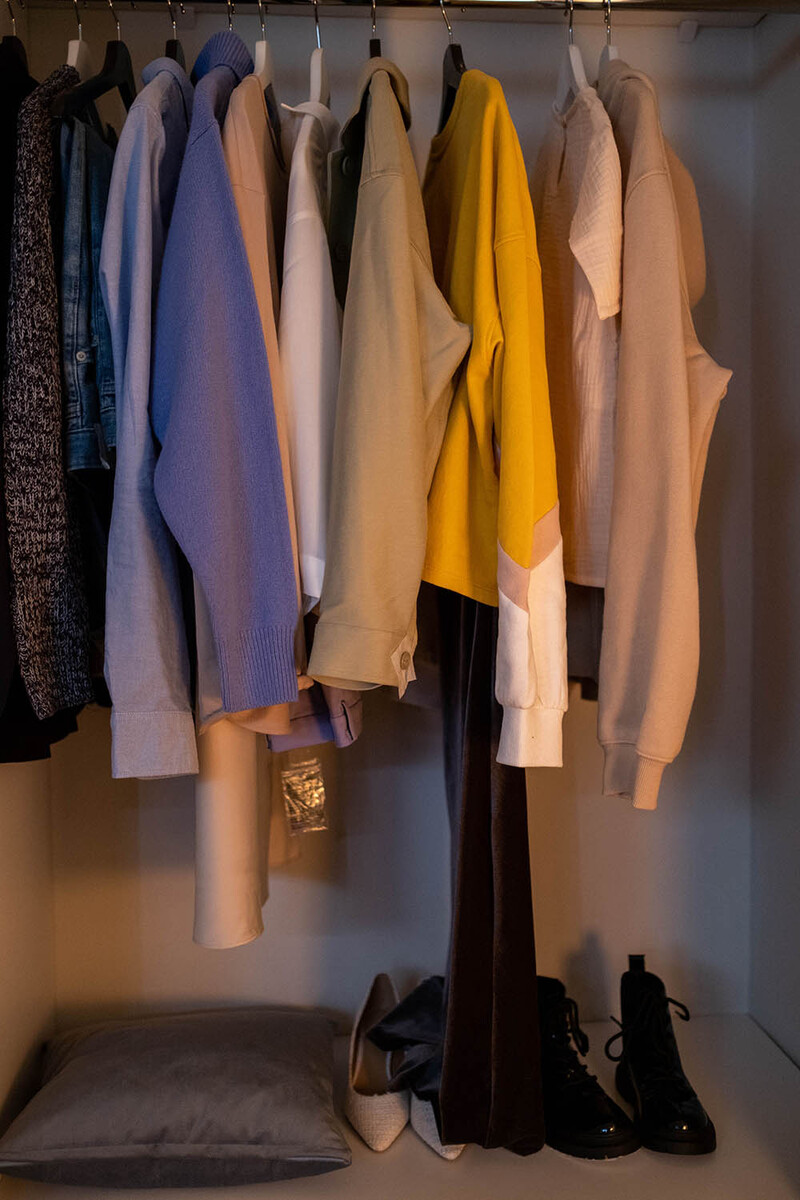
Storage can quietly undo careful washing. The Canadian Conservation Institute advises against hanging knit or bias-cut garments and wire hangers, which can rust, mark fabric and fail to support the shoulders. Its guidance also warns that ultraviolet light turns many fibers yellow. A cool, dark and dry closet keeps mold from settling into natural fabrics.
Sweaters hold their length best when folded, whether it's a fine-gauge cardigan or an oversized merino crewneck borrowed from the men's section.
Those thin plastic bags from the dry cleaner trap moisture, so swap them for breathable cotton covers. Animal fibers like silk and wool do best wrapped in unbuffered acid-free tissue, since the alkaline buffer in standard archival tissue can slowly break down their proteins. Wedding gowns belong flat in a lined box, away from light. A gown kept clean and crease-free also gives a seamstress far more to work with if wedding dress alterations come up years later.
How to Make Delicate Fabrics Last Longer
Every fabric fails in its own way, so match the routine to the fiber.
The payoff reaches beyond one closet. Research from Britain's Waste and Resources Action Programme found that adding just three months of active use per item would cut the carbon, water and waste footprints of clothing by 5% to 10% each.
Damage that does happen is often fixable. A loose seam or dropped hem usually costs less to mend than to replace, and even outdoor brands now run repair services for gear customers want to keep. Between wears, give a silk top a night of fresh air on a padded hanger. That's often enough to skip the wash entirely.









 Connect with Facebook