





All About Functional Fashion: Why Compression Socks Are Getting A Style Upgrade
Color, pattern, and versatility.
Fashion has always borrowed from practical clothing. Workwear jackets, cargo trousers, running shoes, and oversized sportswear have all found their way into everyday wardrobes. Pieces once designed for a specific purpose now appear in street-style photographs, designer collections, and outfits that have little to do with their original use.
Socks are enjoying a similar change in perception.
Once treated as an accessory best kept out of sight, they have become an increasingly visible part of how people dress. Ribbed crew socks appear with loafers, knee-high styles complement skirts and boots, and colorful patterns bring personality to otherwise simple outfits.
Compression socks are part of this wider conversation about clothing that serves a purpose while still looking good.
Traditionally associated with medical settings, travel, and professions that require long hours of standing, graduated compression legwear now comes in fabrics, colors, and designs that make it easier to incorporate into everyday outfits.
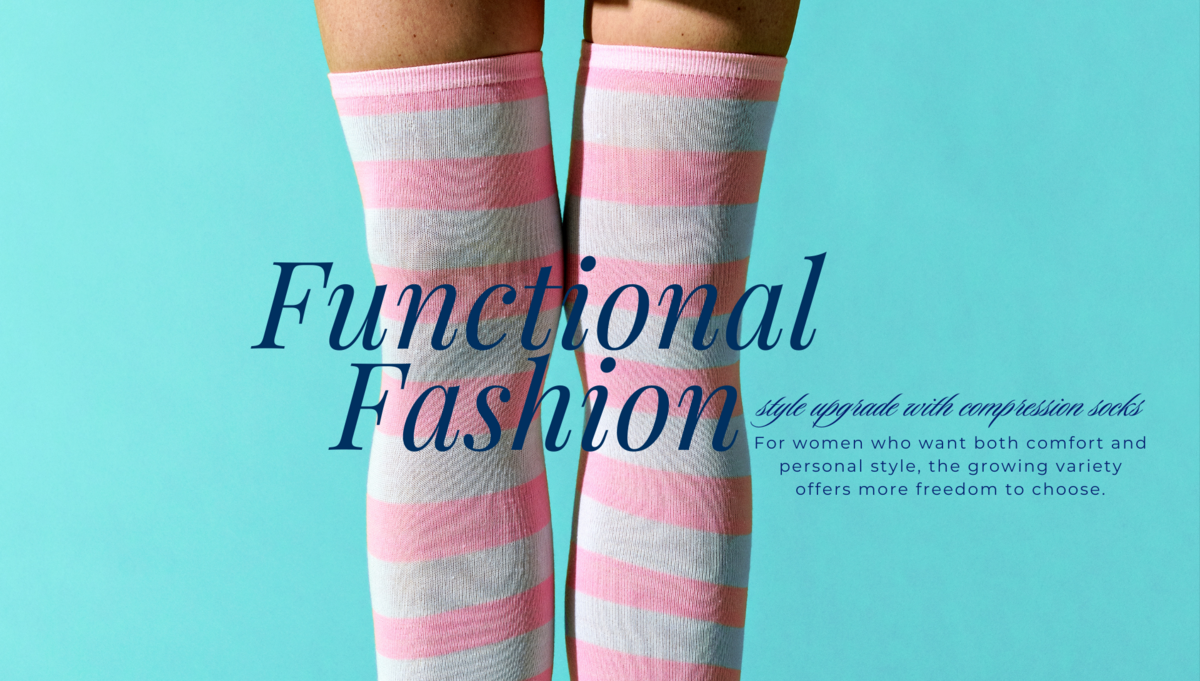
For women who want both comfort and personal style, the growing variety offers more freedom to choose.
When practical clothing becomes personal style
Some of the most familiar fashion staples began as functional garments.
Trench coats were developed for military use. Denim became popular as durable workwear. Sneakers moved from sports facilities into everyday life, eventually becoming one of fashion's most recognizable categories.
Their appeal evolved as designers experimented with silhouettes, materials, and styling.
Compression socks have a different history, but they present a similar opportunity for creative reinterpretation.
Graduated compression garments use controlled pressure to support venous circulation in the legs. They typically apply greater pressure around the ankle, gradually decreasing it higher up the leg.
For years, consumers primarily encountered these products through medical suppliers or specialist retailers. Their appearance often reflected that purpose, with limited attention given to patterns or how they might complement an outfit.
Today, shoppers can find compression socks that resemble familiar fashion accessories, from understated ribbed designs to colorful prints and knee-high styles.
The underlying function remains, but women have more opportunities to choose how that function looks.
The return of statement socks
Socks have become an easy way to experiment with an outfit without committing to an entirely new wardrobe.
A white crew sock paired with loafers can give tailored trousers a relaxed finish. Knee-high socks worn with a pleated skirt create a different silhouette, while patterned socks can add contrast to neutral clothing.
The appeal lies partly in their versatility.
Unlike a jacket or pair of shoes, socks require relatively little planning. They can introduce color, texture, or an unexpected detail without changing the rest of an outfit.
This renewed attention has also opened up possibilities for functional legwear.
Compression socks no longer need to look entirely separate from the clothes women already wear. A neutral pair can sit comfortably within a professional wardrobe, while brighter designs can become a visible accessory.
Of course, ordinary fashion socks and graduated compression socks are not interchangeable. The latter have specific pressure ratings and fit requirements.
Still, their appearance can share the same design language.
How VIM & VIGR brings style into compression legwear
One brand working at the intersection of compression technology and everyday fashion is VIM & VIGR, founded by Michelle Huie with the idea that functional legwear shouldn't require women to compromise on personal style.
The inspiration came from Huie's own experience of wearing compression socks and struggling to find options that complemented her wardrobe.
"I wanted to create a high-quality brand that complemented my style and allowed me to wear compression socks throughout the day without trying to hide them," Huie shared in an interview with Earn Spend Live.
The philosophy continues to shape the brand's approach to compression legwear. Rather than treating compression socks exclusively as medical-looking products, VIM & VIGR incorporate contemporary patterns, colors, and fabrics that complement workwear, travel outfits, and casual clothing.
The compression socks for women collection includes options in cotton, merino wool, and moisture-wicking materials, giving shoppers choices beyond appearance alone.
A subtle pattern might work well with tailored trousers and loafers, while a brighter design could add personality to an otherwise simple outfit. Solid colors offer a more understated option for women who prefer their accessories to blend into their wardrobes.
Fabric choice also influences the experience of wearing compression socks. Cotton blends offer a familiar everyday feel, merino wool provides temperature-regulating properties, and moisture-wicking materials may appeal to women who spend long periods walking or moving between activities.
By combining these considerations with graduated compression, VIM & VIGR shows how specialist legwear can become a natural part of everyday dressing.
Styling compression socks beyond the gym
Compression socks often appear in conversations about exercise, recovery, and travel, but they can also work with outfits designed for ordinary days.
The key is to approach them as part of the overall look rather than an accessory that needs to remain hidden.
1. With tailored trousers and loafers
A neutral or subtly patterned pair can complement cropped trousers, structured shirts, and loafers. If the trousers expose the ankle when seated, the socks become a small but intentional part of the outfit.
For a coordinated appearance, choose a color that complements either the trousers or footwear.
2. With skirts and boots
Knee-high compression socks can work beneath taller boots, particularly during colder months.
For outfits that leave the socks visible, consider how their color relates to the skirt, tights, or footwear.
A ribbed or solid-colored design can create a restrained look, while patterned socks add contrast.
3. With casual dresses and sneakers
Casual dresses and sneakers offer another opportunity to incorporate visible socks.
A simple pair can complement a relaxed weekend outfit, while a brighter pattern adds personality without requiring additional accessories.
The combination works particularly well when the rest of the outfit remains uncomplicated.
4. With everyday workwear
Women working in healthcare, hospitality, retail, education, and other professions may spend much of their day standing or walking.
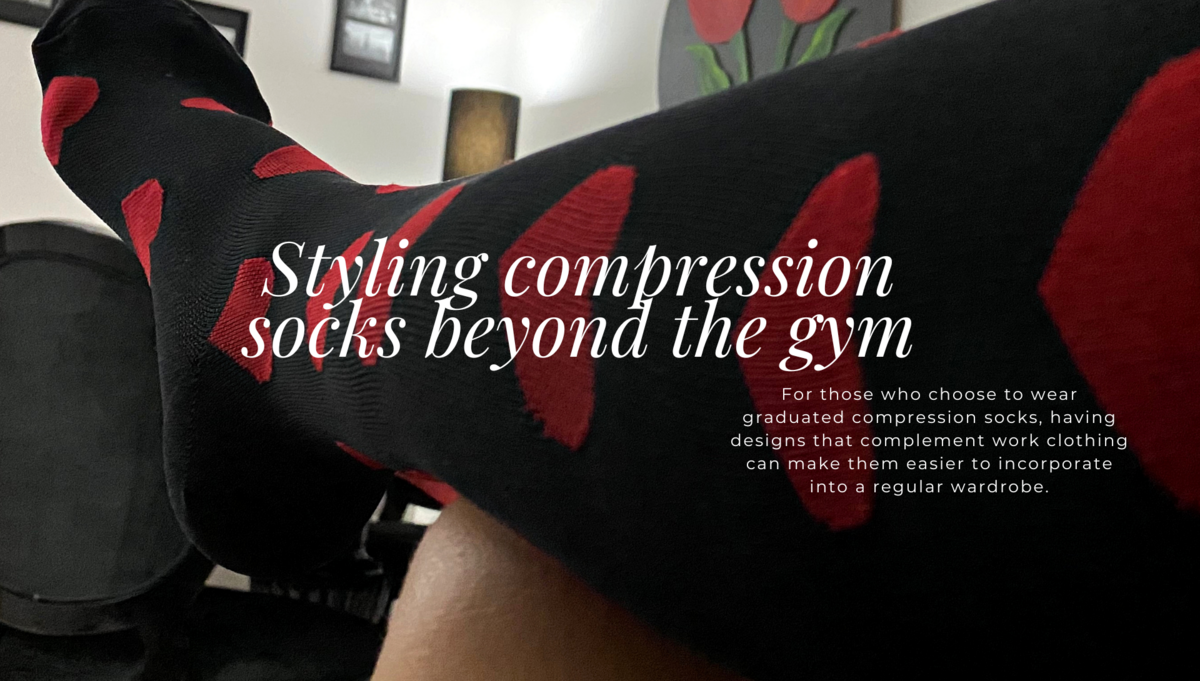
For those who choose to wear graduated compression socks, having designs that complement work clothing can make them easier to incorporate into a regular wardrobe.
Neutral colors may suit workplaces with more conservative dress expectations, while other settings allow greater freedom with patterns and prints.
Choosing the right fabric and fit
Style may attract attention, but comfort and proper fit should guide the final choice. Here are a few things to consider when shopping for compression socks:
- Understand compression levels: Graduated compression socks apply measured pressure, expressed in millimeters of mercury (mmHg). Common ranges include 15–20 mmHg and 20–30 mmHg. The appropriate level depends on individual needs, and higher pressure isn't necessarily better. Seek medical advice when choosing compression socks for a health condition.
- Check the sizing guide: Compression socks require a more precise fit than ordinary socks. Depending on the product, you may need to measure your ankle circumference, calf circumference, and leg length alongside your shoe size.
- Pay attention to comfort: A properly fitted pair should feel snug without causing pain, numbness, or excessive pressure around the upper band. If the socks feel uncomfortable, check the sizing and compression level.
- Choose fabrics that suit your routine: Merino wool offers temperature-regulating properties, cotton blends provide a familiar everyday feel, and moisture-wicking materials can be useful for active lifestyles.
- Consider your wardrobe: Neutral shades and subtle patterns work well with professional outfits, while brighter colors and prints can add personality to casual looks. Choose designs you're likely to wear regularly.
- Review product details before buying: Check the manufacturer's sizing chart, compression rating, fabric composition, and care instructions to make sure the socks suit your needs.
Can functional fashion be fashionable without sacrificing its purpose?
The growing interest in practical clothing raises an interesting question:
In the case of compression socks, the answer depends on preserving the technical characteristics that distinguish them from ordinary hosiery.
Patterns, colors, and fabric textures can change, but graduated compression still requires appropriate pressure distribution and sizing.
A fashionable appearance should never become a substitute for accurate product information.
Consumers should be able to identify the compression level, understand how the garment fits, and determine whether it suits their needs.
This is particularly important for women considering compression socks during pregnancy, for circulation-related concerns, or after a medical procedure. Such situations may require professional guidance rather than a general fashion recommendation.
For everyday shoppers, the expanding range of designs simply offers more choice.
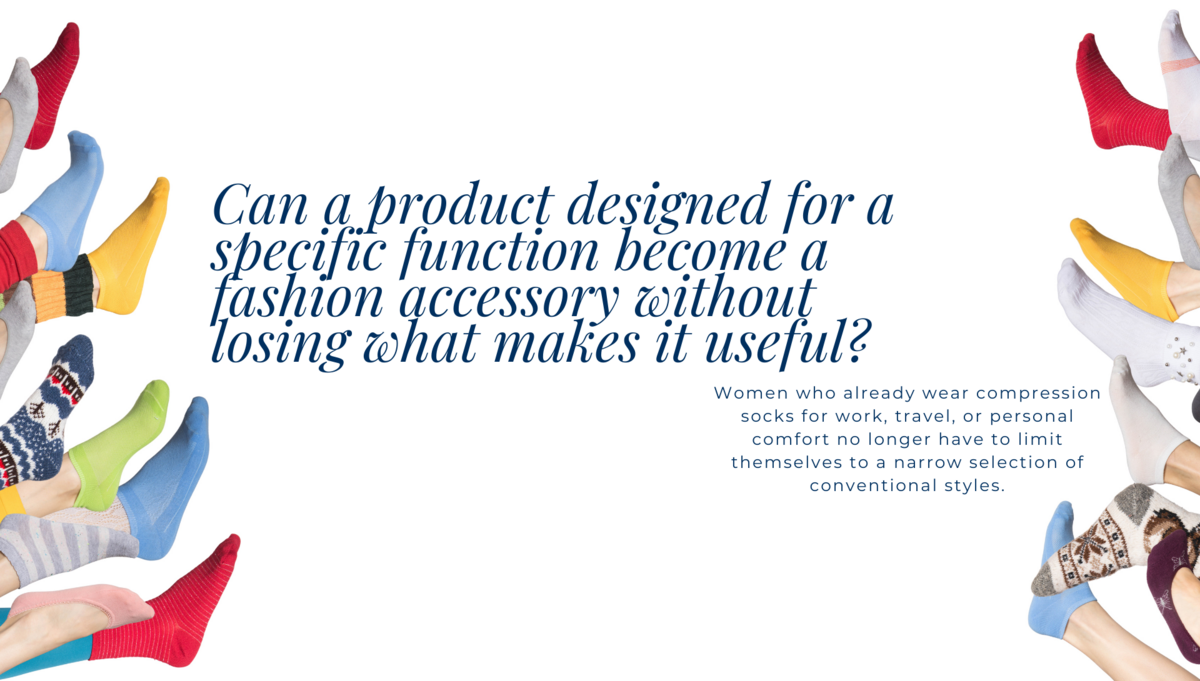
Women who already wear compression socks for work, travel, or personal comfort no longer have to limit themselves to a narrow selection of conventional styles.
A more versatile approach to everyday dressing
The appeal of functional fashion comes from finding clothing that works with the realities of everyday life.
Women move between workplaces, social occasions, commutes, exercise, and travel, often within the same day. Their wardrobes increasingly reflect that variety.
Compression socks offer an example of how a specialized garment can adapt to those routines through thoughtful design.
A pair may sit discreetly beneath trousers during a workday or become a visible accessory with sneakers and a skirt. The choice depends on personal style, comfort preferences, and the garment's intended use.
As brands continue experimenting with materials and patterns, compression legwear has room to develop beyond the conventional designs many consumers associate with it.
For women who already appreciate the practical qualities of graduated compression, that means more options for dressing the way they want.
And for fashion, it offers another reminder that useful clothing can also have a place in a well-considered wardrobe.








 Connect with Facebook