





Haiden Henderson Wants To Be Pop’s Next It Boy
Reinvention without becoming a completely different person.
The singer-songwriter’s debut album, bleach, turns sex, self-discovery and the performance of masculinity into an unpredictable pop experiment. His ambition is not to perfect the male pop star, but to make the whole idea a little stranger.
Haiden Henderson knows how to make an entrance. On “dumblond,” the opening track of his forthcoming debut album bleach, a live orchestra collides with hard-hitting drums, delicate falsetto and crowd vocals. It is a gloriously chaotic introduction, designed to leave listeners wondering what on earth comes next. Henderson calls it the “Grand Spiral Staircase” into the record, which is a suitably theatrical description for an artist who would rather keep his audience guessing than offer them another familiar pop formula.
But the spectacle has a purpose. Beneath the sonic whiplash and cheeky provocations, bleach explores what happens when the person you have been presenting to the world begins to feel like a character you no longer recognize.
“I think the whole project is for me about what it is like to realize that maybe you don’t know yourself as well as you think you do,” Henderson explains. “You’ve kind of been changing who you are for everybody else around you.”
It is an idea that runs through the album’s title, its visual identity and its deliberately unpredictable sound. For Henderson, reinvention can be exhilarating, but it can also become another performance, another attempt to convince other people that you are worth looking at.
Bleach Is About Changing Yourself, Literally
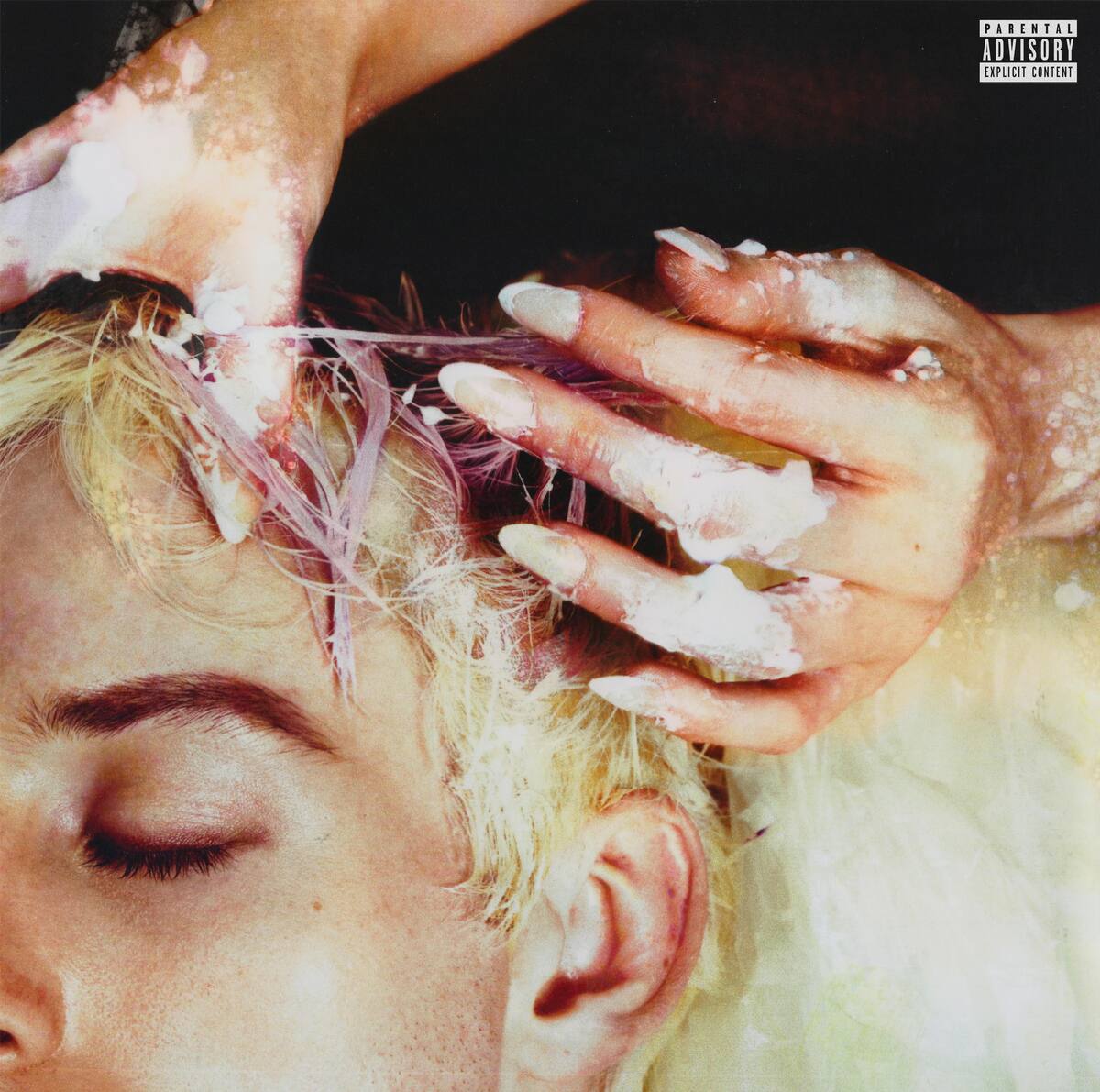
The title carries more weight than a reference to Henderson’s signature light hair might suggest. He describes bleaching as both a recognizable part of his appearance and a symbol of his willingness to alter himself for other people.
Growing up in a small town fascinated by pop culture, he watched artists including Beyoncé, Rihanna, Zayn Malik and Justin Bieber go through their own bleached-hair eras. The transformation appealed to him as a way of leaving an earlier version of himself behind and taking control of how he was perceived.
There is something revealing in the way he describes the process. Bleach becomes a means of making the natural feel artificial, replacing what you were given with something you have deliberately constructed. It is beauty as self-invention, with all the contradictions that come with trying to manufacture authenticity.
That tension also shapes “dumblond.” Its opening image, “Big Bang Confetti,” connects the album’s beginning to the scientific origins of the universe, a fitting reference for someone who studied aerospace engineering before pursuing music. But the song’s narrator is not creating a universe so much as attempting to hold one together. Henderson describes himself as performing for somebody, trying to dazzle them into staying through an exaggerated, larger-than-life persona.
As the album unfolds, that performance begins to unravel. The question is no longer how to become irresistible, but whether performing for everyone has prevented genuine connection with anyone.
The Male Pop Star Needs to Get Weirder
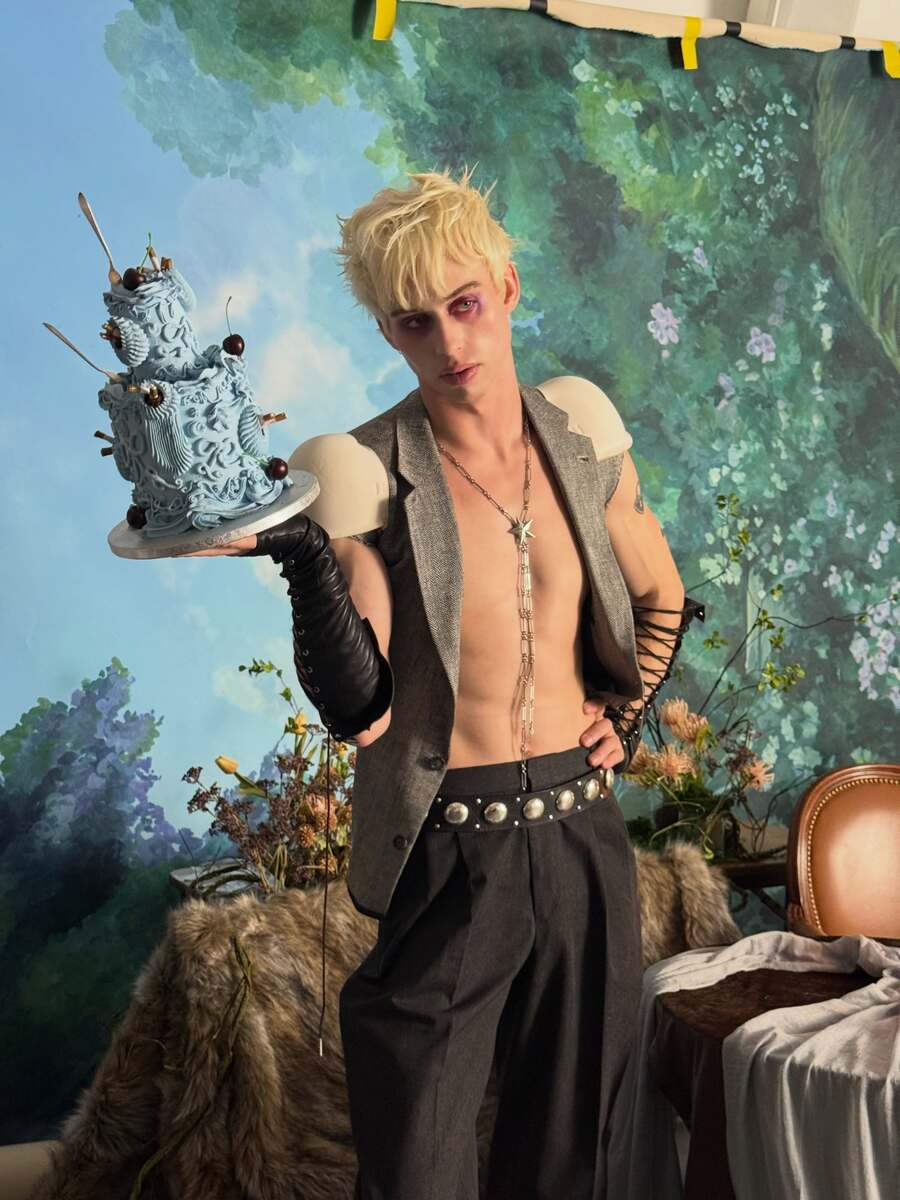
Henderson is refreshingly uninterested in presenting bleach as a polished manifesto. He wants the record to sound fun, even when its subject matter is complicated, and he is happy to let humor sit beside uncomfortable questions.
“I’m the comic relief in my life,” he says, describing his tendency to make jokes while discussing traumatic or intensely personal experiences. His songs operate in much the same way, moving between sincerity and tongue-in-cheek provocation without necessarily resolving the tension.
That approach extends to the album’s production. Henderson often begins writing with a title or phrase, then asks himself what the least expected song to accompany it might sound like. “Kick My Ass,” for instance, became the album’s only track built around acoustic guitar and voice. Rather than following the obvious energy of its title, he went in the opposite direction.
The same appetite for contradiction shapes his broader ambition. Henderson admits he grew frustrated with the familiar conventions of guitar-playing male pop artists, including the version of himself he had previously embodied. Inspired by the theatricality and stylistic freedom of female pop stars, he challenged his team to treat him like a “pop girl” in the studio.
He points to the range of an Ariana Grande record as a useful reference: a song might shift from a rap beat to elaborate vocal harmonies, then become something far more minimal. For Henderson, that dexterity is the point. Pop should be allowed to change its mind halfway through a song.
On bleach, distorted guitars can sit beside hip-hop drums, orchestral strings and delicate falsetto. Henderson and his collaborators even developed an informal rule: if a track started sounding too polished, they might abandon that direction. The goal was not technical imperfection for its own sake, but music that retained the feeling of an idea discovered rather than carefully manufactured.
Desire Without the Usual Masculine Script

Some of the album’s most interesting questions emerge through its treatment of masculinity. Henderson says these themes began appearing naturally as he wrote, before he fully recognized how much space they occupied in his thinking.
Raised by a single mother, he has often felt out of step with the social dynamics of other men. He describes struggling with locker-room culture and the expectations surrounding how men should behave in relationships. Rather than presenting those feelings as a problem to overcome, bleach gives them room to become songs.
On “NSFW,” he imagines a relationship in which a successful, ambitious woman can pursue her own life while he embraces the role of a trophy husband, finding other ways to care for her. “i wanna be your girl” explores a different kind of intimacy, asking whether a partner might be more emotionally open if he could occupy a space traditionally reserved for her female friends.
Even “freak for you,” with its explicit premise, approaches desire through a willingness to please rather than an insistence on dominance. Henderson is interested in what happens when vulnerability, service and sexual confidence coexist, instead of treating them as mutually exclusive.
He does not claim to have solved masculinity, nor does he position himself as a model for other men. The songs are closer to experiments in understanding himself, using pop as a space where questions can be expressed before their answers are clear.
The Fans Are Part of the Experiment

Henderson’s relationship with his audience has helped him become more comfortable taking those risks. His Discord community, which he says numbers around 17,000 people, is an active part of his creative world. He consults fans and collaborators throughout the process, including maintaining what he calls the “fan girl perspective” in the studio.
The response to “freak for you” was particularly instructive. Henderson worried about releasing such an explicit song, but the enthusiasm it received challenged his assumption that he needed to restrain himself to keep people interested.
He has also extended the music into a separate narrative through Wattpad, releasing chapters of a dark-romance story alongside singles. What began partly as a joke about the song’s sexual content and its delayed release developed into an ongoing project full of Easter eggs and clues for fans to decode.
It is another expression of the same impulse behind bleach: make the experience less predictable, give people something to participate in, and resist the temptation to repeat a successful formula indefinitely.
Henderson admits he is still learning how to tolerate the possibility that listeners might dislike what he makes. He wants to move beyond lukewarm reactions, even if that means risking a stronger negative response. For someone who openly describes himself as desperate for people to love him, that is no small shift.
The album’s central contradiction remains unresolved, and perhaps that is what makes it compelling. Henderson is building a public identity while questioning how much of himself he has reshaped for public consumption. He wants to be magnetic, but not manufactured; provocative, but not trapped by provocation; a pop star, but not a predictable one.
With bleach, he is not promising a definitive new blueprint for male pop. He is making room for a version of it that can be horny, soft, theatrical, ridiculous and sincere, sometimes within the same song. Reinvention, it turns out, does not have to mean becoming a completely different person. Sometimes it means finally allowing the less convenient parts of yourself to make the record.











 Connect with Facebook