





Chelsea Cutler Is Done Trying To Be the Same Person Forever
Moving forward does not mean having everything figured out.
The singer-songwriter’s fourth album, IS THIS THE END?, turns a breakup, a changing sense of identity, and the approaching end of her twenties into a two-part chronicle of growing up.
Across 14 tracks, she discovers that moving forward does not mean having everything figured out.
Two Years, Two Versions of Herself

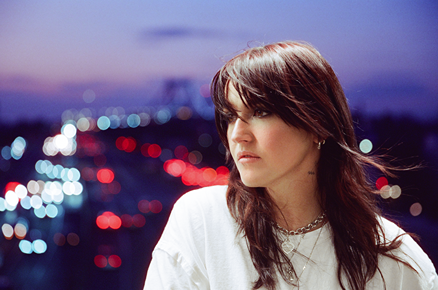
What if you could listen back to two years of your life and hear yourself changing in real time? For Chelsea, that is precisely what IS THIS THE END? became. Written between the ages of 27 and 28, the singer-songwriter’s fourth studio album documents a period shaped by the end of a significant relationship, new experiences, and an increasingly complicated understanding of herself. Rather than reconstructing those experiences with the benefit of hindsight, Chelsea wanted the record to follow events as they happened. The result is an album divided into two discs, each representing a different stage of that process. The first half moves through the search for distraction, excitement, and levity that can follow heartbreak. The second turns inward, making room for slower arrangements, more contemplative lyrics, and questions that cannot be answered by going out another night. “I wanted to essentially tell the story mostly and essentially chronologically,” Chelsea explains. The songs became byproducts of what she was experiencing, with their larger meanings often becoming apparent only after the writing was finished. It is a structure that allows the album to hold contradictions without rushing to resolve them. The person who wants to feel everything and the person who would rather avoid sitting with difficult emotions are both part of the story.
Growing Up Means Complicating the Story

Chelsea has spent much of her career building connections through collaboration, including her work with Jeremy Zucker on the brent project. This time, however, the absence of guest features emerged naturally. The record was too closely tied to her relationship with herself to require another voice. She describes the past two years as a period of turning inward, reconsidering her values, and deciding what she wants to carry into the next chapter of her life. Approaching 30 has brought a different kind of reflection, one that moves beyond the emotional certainty of early adulthood. “When you're like 22 and you get heartbroken, you're like, ‘I'm sad and that's the song,’” she says. By her late twenties, she had begun approaching experiences through a more multidimensional lens. That shift is central to the album. Chelsea is not interested in presenting herself as the hero of every song or pretending that every decision made sense at the time. On “BAD,” she revisits behavior she can now examine with greater perspective. Yet when she was writing it, her immediate reaction was less about moral judgment than the excitement of experimenting with sound. The track marked a return to analog synthesizers and more adventurous production after a period focused on organic instrumentation. She remembers enjoying the process, feeling creatively back in her element. Understanding what the song revealed about her came later.
The Sound Changes When the Person Changes


The musical contrast between the album's two halves reflects the emotional distance Chelsea traveled while making it. The opening tracks are driven by movement, bright production, and the restless pursuit of pleasure. Later songs become more spacious and introspective, allowing the writing to sit with feelings rather than outrun them. Chelsea had been reconnecting with the music that inspired her as a teenager and young adult, including the angsty, experimental energy of her earliest artistic influences. But revisiting that period did not mean trying to become her younger self again. She remembers wanting to recover the person who could say whatever came to mind, while also appreciating the perspective and grounding she has gained with age. Both impulses remain present, even when they pull in different directions. For her, artistic growth is not about permanently abandoning one sound in favor of another. She admires musicians who can experiment across genres while remaining unmistakably themselves, and she is open to following new ideas wherever they lead. A future project might build on the electronic textures of IS THIS THE END?, return to acoustic songwriting, or head somewhere entirely unexpected.
Heartbreak Has Its Own Calendar

On IS THIS THE END?, time becomes more than a way to organize the track list. It is something Chelsea actively watches, measures, and questions. She found herself paying closer attention to seasons, weather, and the way particular moments could change her emotional state. After a long-term relationship ended, she began wondering when she would feel better, whether the same time next year would hurt less, and what healing would actually look like. She describes the breakup as a form of grief, one that introduced her to a different kind of loss. When someone has been part of your everyday life for years, their absence changes the shape of ordinary routines as much as it changes your understanding of the relationship itself. Writing became a way to process those experiences. Journaling helped her examine the questions behind the songs, and she eventually began publishing essays that offered another layer of context. She hoped those reflections might help listeners recognize something familiar in experiences that initially felt intensely personal. The same impulse informs her decision to speak more openly about her queerness. Chelsea says the breakup encouraged her to reconsider her relationship with herself and become more intentional about representation. Rather than treating her sexuality as a secondary characteristic, she has grown increasingly proud of it and interested in helping others feel that same sense of affirmation.
Maybe the End Is Just a Question
The title IS THIS THE END? began with the end of a relationship that had occupied much of Chelsea's twenties. At first, the loss felt bigger than the relationship itself. It threatened the future she had imagined and raised the frightening possibility that a defining period of her life was closing before she was ready. Over time, making the record gave her enough distance to look back at the experience differently. The mountain she initially thought impossible to climb became something she could view from above, with a clearer sense of how far she had traveled. She hopes the album can offer listeners permission to give themselves grace while navigating their own twenties, a decade often treated as an optimization project in which every decision should contribute to a better, more successful version of yourself.
Chelsea's message is simpler: you have to experience things to learn what matters to you. You will make decisions, change your mind, and discover that some versions of yourself no longer fit. IS THIS THE END? does not offer a neat conclusion to that process. Instead, it captures the moment when one chapter closes and the next remains unwritten.
For an artist who has spent years turning her feelings into songs, that uncertainty may be the most honest place to begin.











 Connect with Facebook