




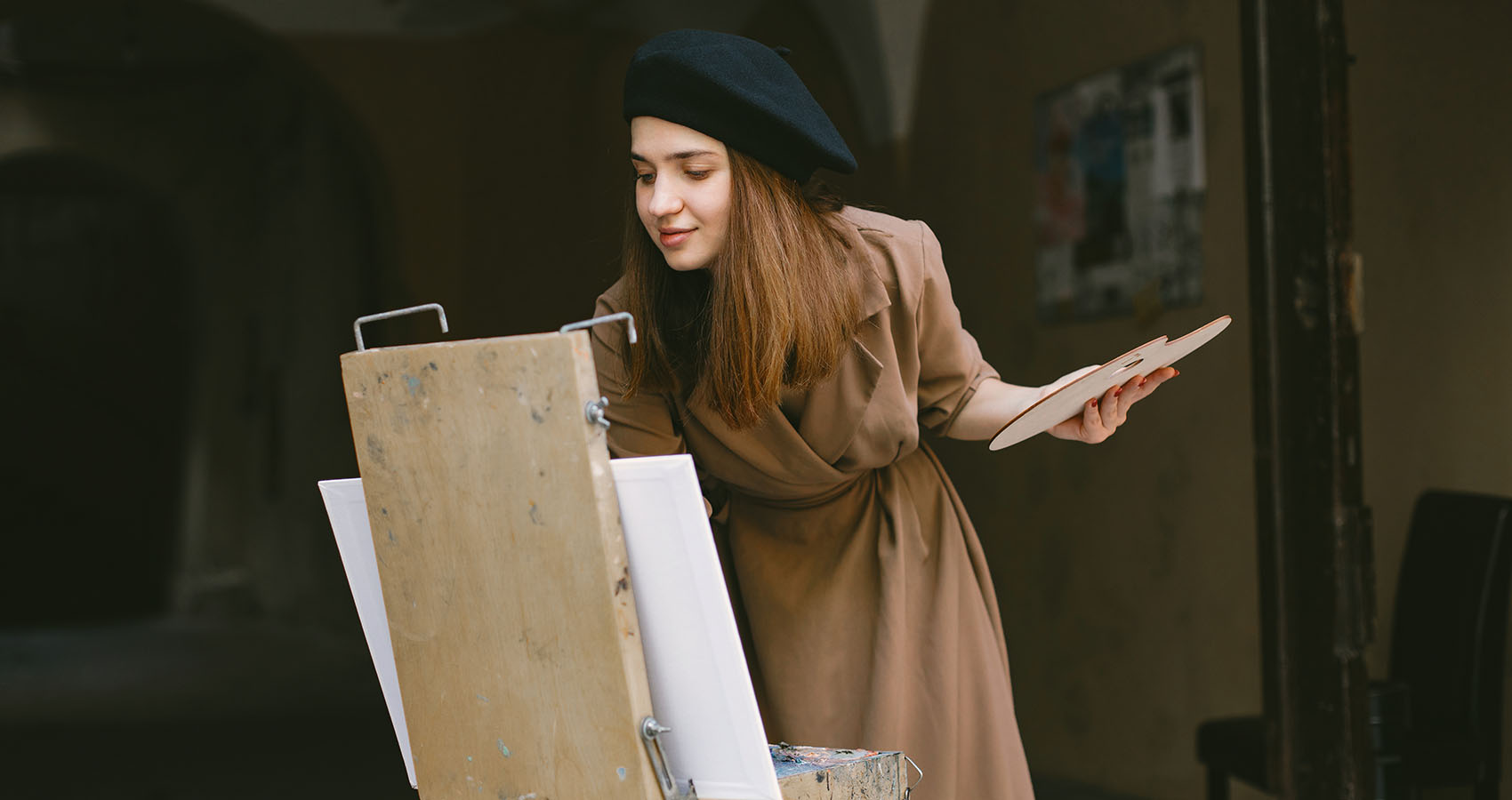
Painting Your Way Through Fashion Week
Capturing fashion through paint, not photography.
During Copenhagen Fashion Week last February, a woman sitting cross-legged on a concrete bench outside a show venue caught more attention than half the street style outside. She had a tiny watercolor set balanced on her knee, a half-finished painting of an oversized trench coat in cadmium orange drying on her lap, and a small crowd forming behind her. Nobody asked who she was wearing. They wanted to know what she was painting.
That moment stuck with me because it felt like something shifting. Fashion documentation has been dominated by the DSLR and the iPhone for so long that we forgot there were other ways to record what a collection makes you feel. Photography freezes a look. Watercolor translates it. And more people at fashion events are starting to figure that out.

Why a painted runway moment hits differently than a photo
A photograph of a runway look gives you every detail. The stitching, the drape, the exact Pantone of the fabric under those overhead lights. But it doesn't tell you what the silk looked like when it moved. It doesn't communicate the mood in the room when a model turned a corner in a floor-length coat that made thirty people inhale at the same time. A watercolor sketch can do that, and it does it through what it leaves out.
Fashion illustrators have known this for a century. Before cameras were allowed backstage, illustration was the only way to communicate collections to the public. Rene Gruau painted Dior campaigns. Antonio Lopez drew the energy of Studio 54 in real time. The tradition never fully disappeared, but it did get sidelined by digital content. Now it's circling back, and this time it's not reserved for trained illustrators with agent representation.
The real-time sketching trend at shows and pop-ups
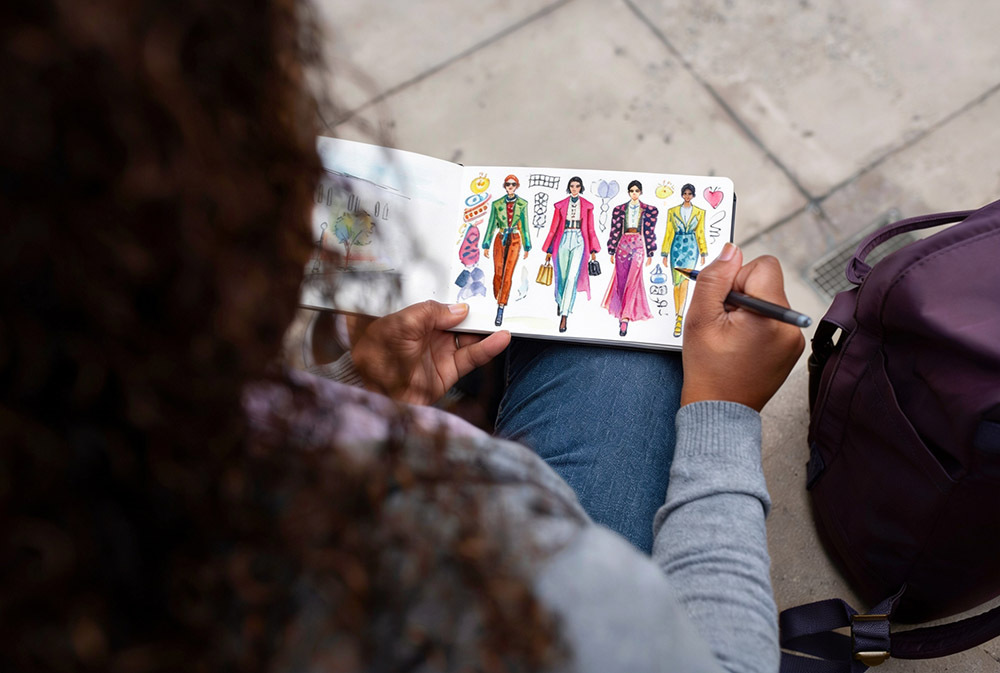
At London Fashion Week in September 2024, several independent brands set up live illustration corners near their presentations. Guests were handed small watercolor palettes and encouraged to paint what they saw instead of filming it. The brand Labrum London reportedly collected over 200 guest-painted cards from a single show. The results were messy, unfinished, and completely charming. Some ended up on the brand's Instagram stories, which felt more honest than any influencer reel.
Pop-up shops are doing similar things. When Jacquemus staged its "Le Bleu" activation in Paris, attendees posted watercolor interpretations of the space on social media alongside their outfit photos. Nobody told them to. The impulse came from the fact that some experiences resist being photographed well. A wash of cerulean blue on wet paper communicates "Jacquemus blue room" more accurately than a phone camera fighting against artificial lighting.
You don't need illustration training to do this
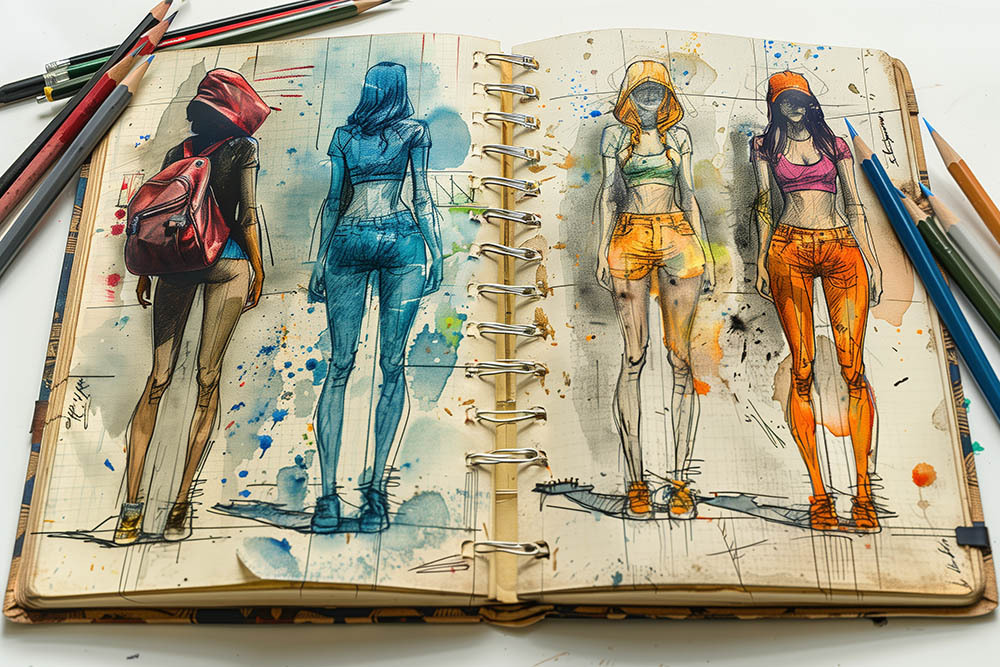
Here is where the intimidation usually kicks in. "I can't draw." "I haven't painted since year six." "My sketches look like a five-year-old's work." Good. That genuinely does not matter here. The point of painting at a fashion event is to capture an impression, not produce a technical rendering. Wet-on-wet washes, loose brush strokes, colors bleeding into each other: that stuff is the aesthetic, not the mistake.
Beginner watercolor painting actually suits this context better than advanced technique does. You're working fast. The model is gone in twelve seconds. You're catching a silhouette, a color palette, a feeling. Precision would slow you down and kill the energy of the sketch. The less experience you have, the looser your marks, and the more those marks look like they belong on a mood board.
What you do need is a kit that doesn't require a table, a water cup, or five minutes of setup. The old-school watercolor field kit with separate tins and loose brushes was never going to work perched on your knee in a folding chair at a show. An all-in-one pocket-sized set from tobioskits.com solves that problem: pigments, paper, and a water brush clipped into a single unit that fits in your bag next to your phone and your show invitation. No cup of water to knock over. No setup. You open it and you're painting.
Fashion week as a creative practice, not just a content opportunity
The interesting shift here is that painting at fashion events changes your relationship to the clothes. When you're photographing, you're collecting. When you're painting, you're interpreting. You have to make decisions about what matters in a look. Is it the color? The movement? The proportions? You're doing design analysis without calling it that.
Style-conscious people already think this way. You edit outfits. You understand that a look is more than its individual pieces. Translating that understanding into a watercolor sketch, even a rough one, is a natural extension of how you already engage with fashion. It just uses a brush instead of a camera roll.
Where this works beyond the front row
You don't need a fashion week invite to try this. Street style outside any major show is free to observe and paint. So is the window display at your local boutique, the outfit your friend wore to brunch that made you say "wait, turn around," or the color combination you spotted on someone's coat on the train.
Fashion is visual culture. Watercolor is a visual response. The connection between them is obvious once you stop thinking of painting as something that requires a studio and a degree. A pocket watercolor set, a cafe window, and fifteen minutes of watching people walk past in interesting clothes is a creative practice that costs almost nothing and produces something a phone never could: your specific interpretation of what you saw and how it made you feel.
The woman on that bench in Copenhagen wasn't trying to go viral. She was just paying closer attention than the rest of us. And the painting she made, imperfect and still a little damp when she tucked it into her bag, was a better record of that moment than anything on my camera roll. Sometimes the most stylish thing you can do at a fashion event is put your phone down and pick up a brush.








 Connect with Facebook