




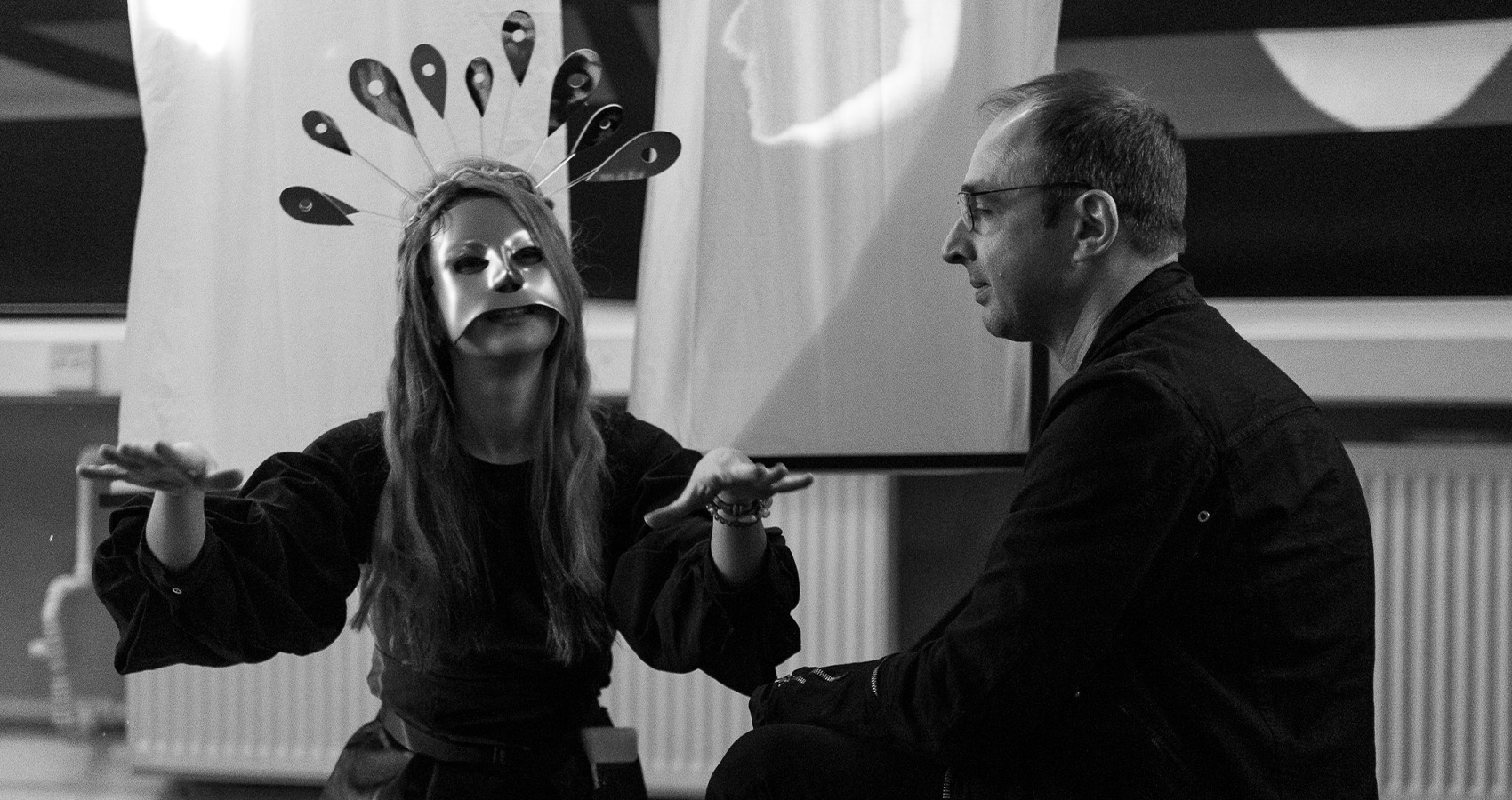
Krystyna Khara's Citizen Of Nostalgia / Citizen Of Change
A conversation with Krystyna on liminal belonging, hybrid worlds, and the future of migration.
Krystyna’s project, courtesy of the University of the Arts London, Citizen of Nostalgia / Citizen of Change, feels like an emotional geography lesson for our fractured century, a map drawn in exile, longing, and that electric pull toward what we might become. Moving between analogue tenderness and algorithmic distortion, she’s constructing a world where memory and futurity overlap like double exposures. We stepped into that liminal terrain with her.
On the origin seed
Krystyna doesn’t trace this work back to a single spark so much as a sedimentation of lived upheaval. Since being forced to evacuate, she’s lived in constant motion shuttling between continents, schools, and family fragments. Airports became more familiar than homes; long-haul flights, oddly grounding.
Migration stopped being spatial and became temporal: divided between a past impossible to return to and a future that kept shifting underfoot.
“You can’t go back,” she says. “Places change whether you’re there or not.”
Out of this came her twin archetypes the one clinging to a lost frequency, and the one learning to breathe in new atmospheres.
Handmade vs. machine-made
Krystyna doesn’t see analogue and digital as opposing forces. She treats them like two parts of the same hybrid reality we’re all floating in.
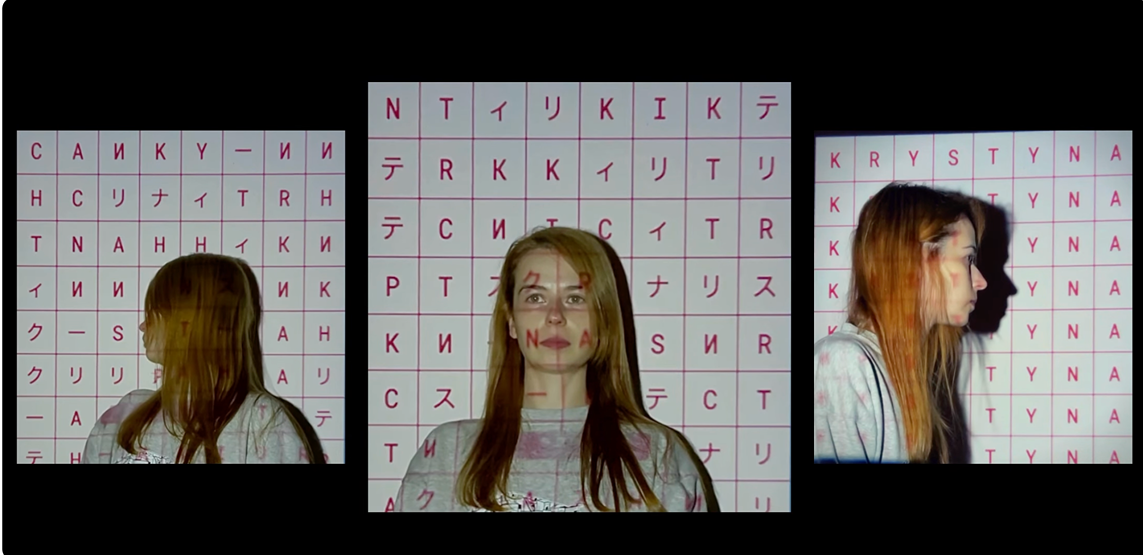
Personal objects, tickets, scraps,and childhood trinkets hold memory like a pulse. But emergent tools like TouchDesigner and Unreal carry their own strange intimacy. She tells a story about “Nostalgic Collapse,” which began as an analogue collage before being melted digitally through a node called Displace TOP.
“Pixel displacement felt exactly like migrational dislocation,” she says.
Tech becomes human because people made it for each other tutorials, shared plugins, the generosity baked into creative code communities.
For her, digital space is a social fabric.
Holding the double edge of nostalgia
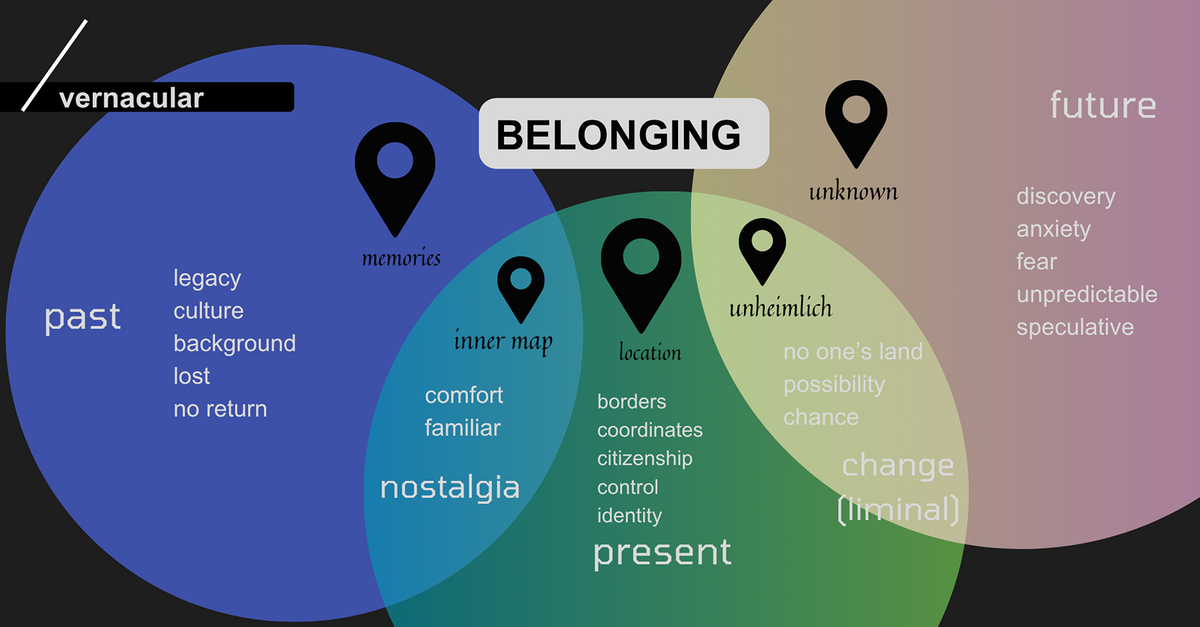
She refuses the easy narrative. Nostalgia isn’t regress or romance, it’s a glitch in perception, the moment the place in your mind stops matching the place in the world. A chestnut tree in any country pulls her back to Kyiv, but not quite.
These ruptures can comfort, or they can disorient. Eventually, she says, you choose: wrap yourself in the past, or move toward the unknown.
The vulnerability of names
Names, for her, are relational weather systems. She stopped insisting on proper pronunciation years ago; she sees the attempts, even the failed ones, as gestures of belonging. But migration complicates that ease. Transliteration erases histories. Bureaucracy reduces names to digits. In Japan, the kanji system marks who’s “inside” and who will always be foreign.
Names become both archive and rupture nostalgia for oneself, a gateway to another.
The Citizen of Change
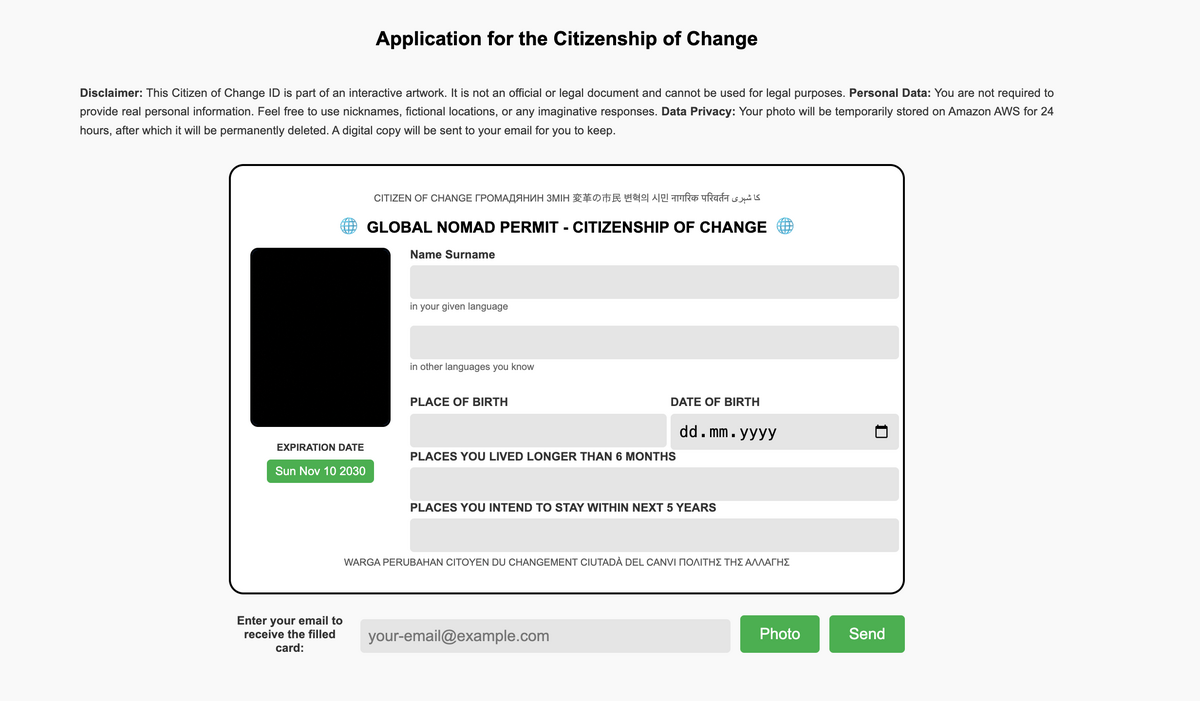
This archetype is part admiration, part warning, part inevitability.
Krystyna is drawn to nomads, chosen or forced, because they resist the gravitational pull of the settled world. But she’s clear-eyed about the hardship, the precarity, and the privilege embedded in movement.
Migration is rising; belonging is mutating.
“Change is always forward-looking,” she says.
Stillness frightens her more than transit.
Glocal identity
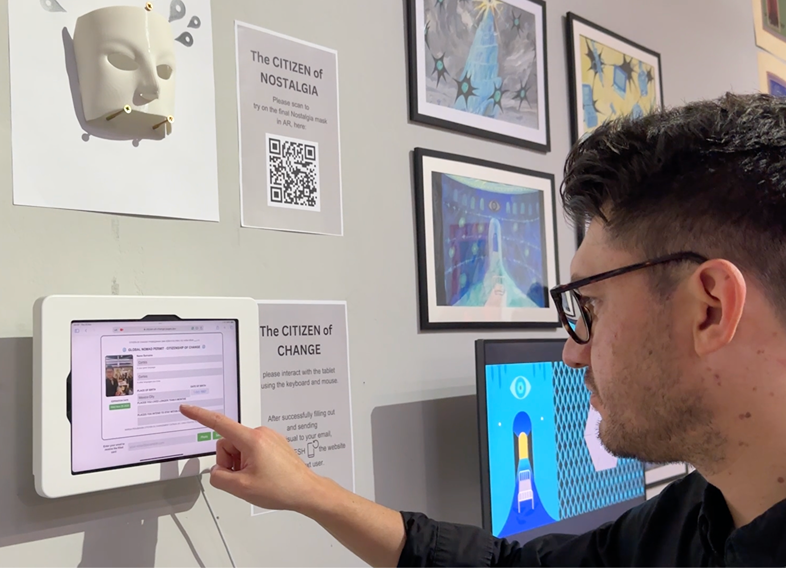
“Glocalization” isn’t about holding on to roots; it’s about absorbing new frequencies. She identifies most with other migrant people whose cultural signals have become hybrid, layered, unplaceable. It’s less about where you’re from and more about who can understand the shapeshifting you’ve had to learn.
Beauty, trauma, and immersion
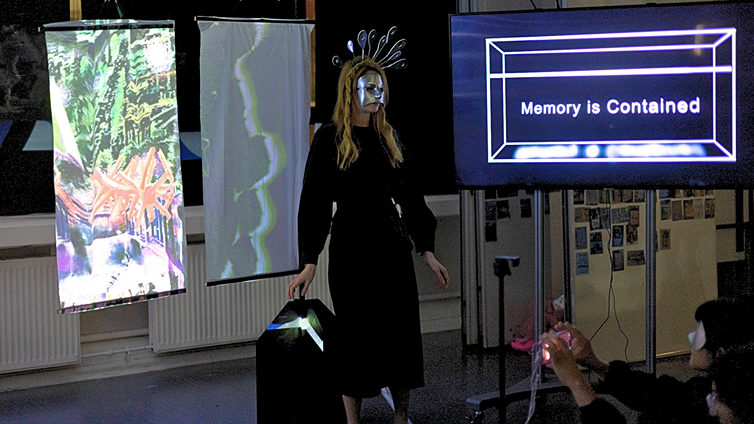
When she builds a piece, she’s world-building. Because the work grows out of her own lived experience, it’s already immersive before an audience ever steps in.
She doesn’t treat trauma as a theme but as an environment, multifaceted, unpredictable, dependent on the viewer. In her performances, each audience transforms the room differently. Confusion, grief, recognition, and estrangement all part of a collective storytelling. Technology, in this sense, isn’t just a medium; it’s another actor in the room.
Privilege and power
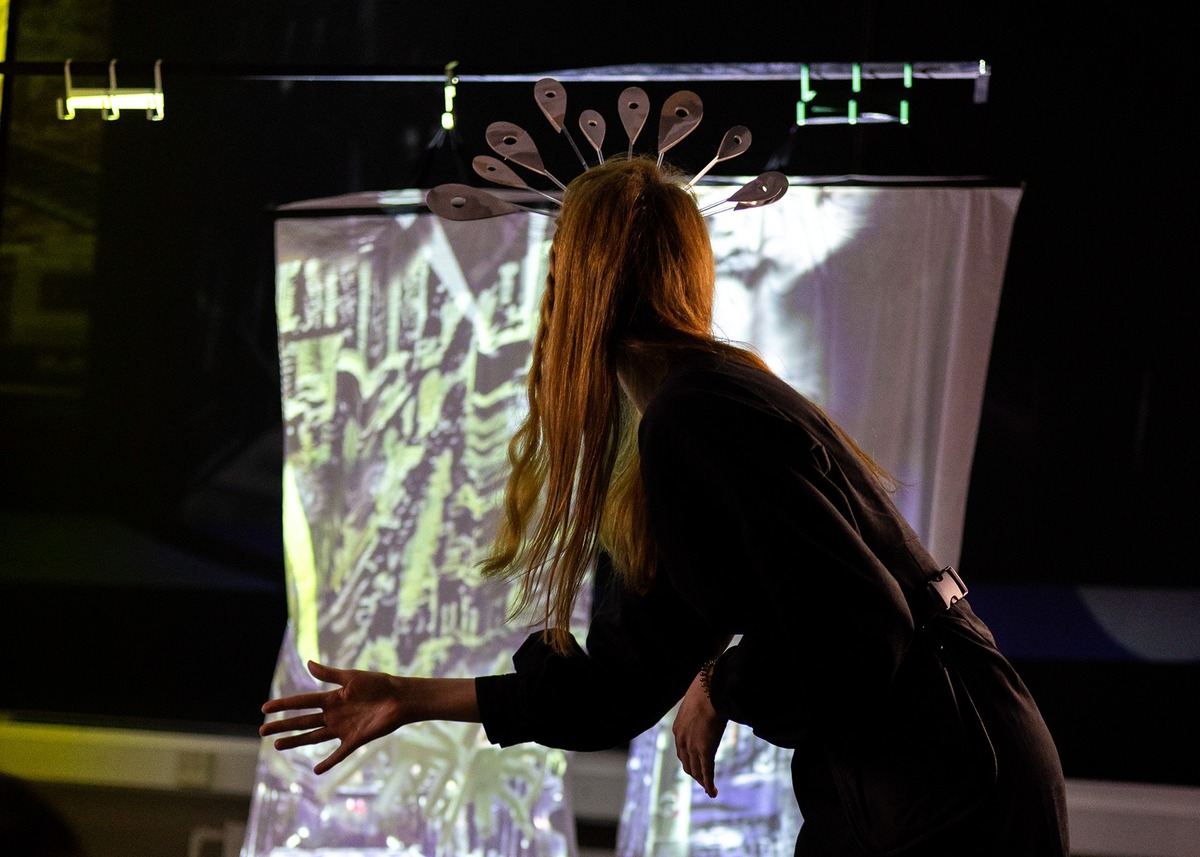
Krystyna doesn’t look away from the privileges embedded in her own evacuation the ability to leave when others couldn’t. She thinks of the work as peeling an onion: each layer exposing another power structure inside migration.
That awareness shapes the world she constructs. The project may be speculative, but its ethics are grounded.
Traces in a digitized world
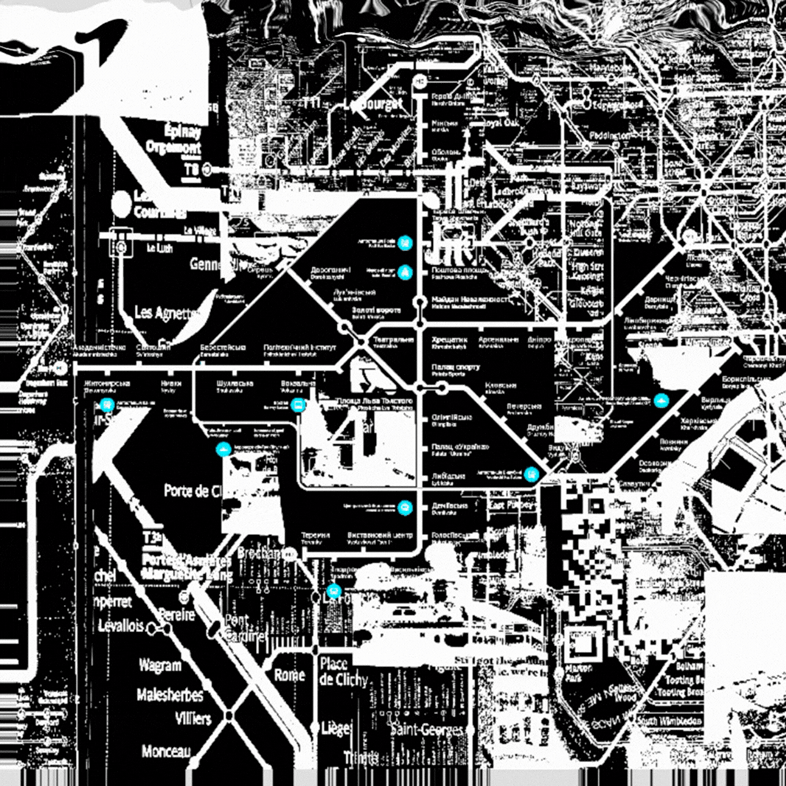
Traces, for her, are portals. Physical artefacts, such as train tickets, metro tokens, and snack wrappers, hold memory more vividly than digital files ever could. Railroads appear throughout her work because, across continents, they stitched her life together: childhood summers in Crimea, heartbreak in Kyiv’s metro, evacuation to Poland, quiet nights in London, gentle train rides in Japan.
Traces become a way of seeing your life as a continuous story rather than a series of ruptures.
The future home of the project
She wants the work to live in liminal zones, train stations, airport tunnels, and ferry terminals. Not to decorate these places, but to interrupt them. Imagine walking through a tunnel as a train barrels by and seeing your own movement rendered as light, your body becoming part of the story, even for a moment.
She wants passersby to question what it means to be able to move freely, to enter and exit borders without thinking. To see each other not as blur or noise, but as co-travelers sharing a brief slice of place and time.








 Connect with Facebook