




How Social Media Turned Match Day Into A Style Moment
How athletes, fans, and brands turned arrivals into fashion moments.
Some 60 pieces of cut fabric went into the skirt A'ja Wilson wore for her tunnel walk at WNBA All-Star Weekend in Chicago this summer. Her stylist took fragments of Nike hoodies, tees and shorts, layered them onto a single base and finished the look with a high slit and a cropped track hoodie cinched at the waist in her signature pink.
Nike published a full breakdown of the outfit, the way a fashion house walks readers through a runway look. Two decades earlier, the NBA had written rules to keep the walk into an arena plain. This year ESPN created an award for it.
Cameras account for most of that change. The walk from the players' entrance to the locker room is the one stretch of a game day when an athlete is photographed head to toe in clothes nobody issued, in a fixed spot, at a time printed on a schedule.
That makes it something a photographer can plan for and an account can post on time. Once teams and fan pages started doing both, the arrival became a daily fashion story, and leagues, sponsors, retailers and finally fans each found a use for it.
The NBA Made Arrivals A Dress Occasion In 2005
The league told teams in a 2005 memo that a business casual dress code would take effect that season. It covered players arriving at games, leaving them, giving interviews and making appearances. ESPN listed what was out: sleeveless shirts, shorts, T-shirts, sunglasses indoors, headphones away from the bus, plane or locker room, and chains, pendants or medallions worn over clothes.
Many players took the rule as a strike at hip-hop style and at Allen Iverson in particular, as The Guardian recalled in a 2025 retrospective. The code has loosened since the league changed commissioners in 2014, and a guard interviewed for that piece said he had not known there was one.
The same piece traced where the rule led: a mandate sold as professionalism grew into tunnels lined with photographers and players with high-fashion endorsement deals. The economics inverted along the way. A code written in 2005 left players buying clothes to satisfy it, while the endorsement deals that followed had labels supplying them, so a rule that once cost a roster money became a slot where somebody else's product got worn on camera.
Two Slam Staffers Gave The Tunnel Its Own Feed
Those photographers found a far bigger audience in 2018, when Slam magazine's Ian Pierno and a fellow editor started the Instagram account LeagueFits to archive what players wore. Vogue's 2019 profile of LeagueFits described the tunnel as the stretch between the parking lot and the court.
The account had more than 351,000 followers by then and passed one million by 2024. Pierno explained the draw to Who What Wear: "The 12th player in the rotation can be as recognized as the star of their team if they're putting together great looks."
That is the part sponsors later paid for. A reserve who dresses well collects attention that has nothing to do with minutes played, and the pages that post him name the labels in the caption, so a jacket reaches an audience the box score never will.
Recognition cut both ways. When Kyle Kuzma arrived at Washington's arena in 2021 in an oversized pink sweater, LeBron James mocked it in the comments and other players joined in, while the 109-103 loss that night got a single clause in the New York Post's story.
The WNBA Went From Fines To The Orange Carpet
Women's basketball reached the same place by a slower road. Diana Taurasi told The Ringer that players were once fined for ripped jeans and had to travel in slacks, penny loafers and button-ups.
The 2024 season reversed the order. Caitlin Clark wore Prada head to toe to that year's draft. Who What Wear counted her as the first player, man or woman, to wear the label to one, and Pierno said WNBA arrivals soon drew far more engagement on LeagueFits than NBA stars managed during the league's own finals.
At WNBA All-Star Weekend, Gabby Williams, the first Golden State Valkyries player picked for the game, walked the orange carpet in a custom corset. It came from a hockey player who designs on the side and cuts for the proportions of a tall athlete, down to the elastic waistband.
Soccer Fans Built A Match-Day Uniform Of Their Own
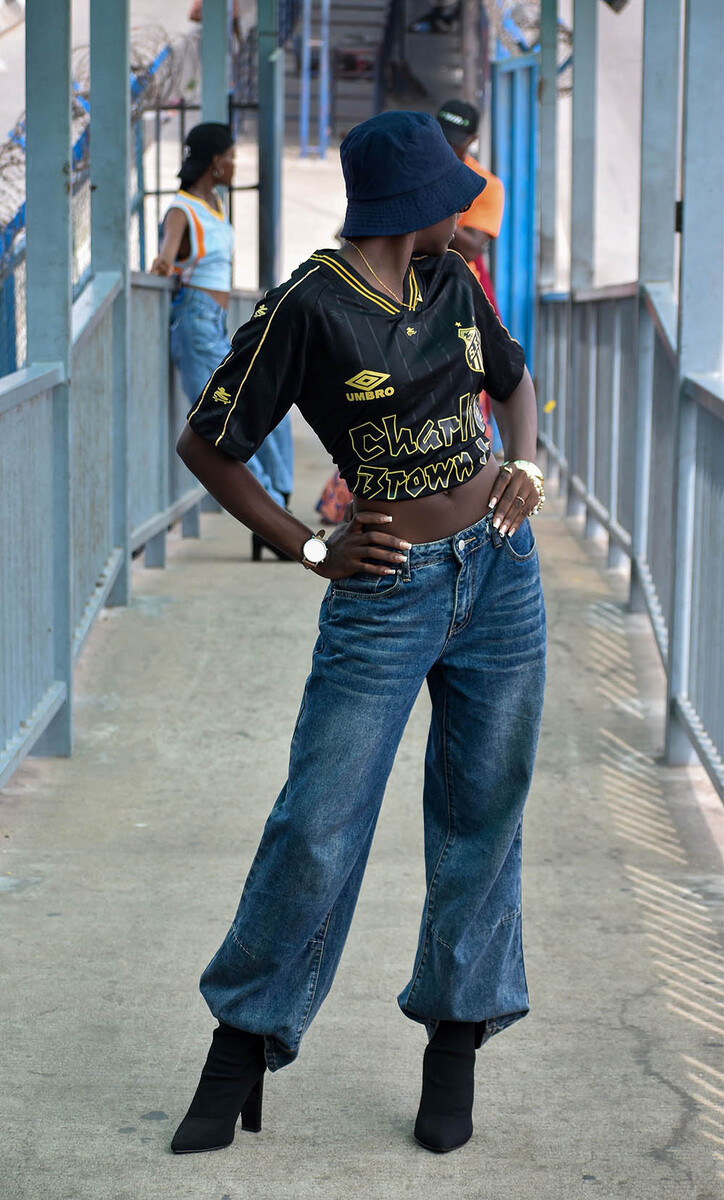
Soccer fans were dressing for match day without a stylist. In late 2021 a TikTok creator posted a clip in blue jeans, a soccer jersey and white Adidas Sambas and called "bloke core" the hottest trend of the year ahead, according to Know Your Meme. The look spread the following spring.
Fizzy Mag's read on Levi's England collection for the 2026 World Cup put the idea plainly: soccer style was never only about jerseys. The tournament summer showed up in sales, and Debenhams reported retro soccer shirt sales up 260% between May and June 2026.
New shirts sold best when they looked old. JD Sports compared summer shirt revenue with the same stretch of 2025 and found heritage details on four of the five clubs with the biggest gains.
Liverpool's model is the 1989-91 design supporters still call the Candy kit, after the sponsor on its chest. A shirt front stays in circulation for decades after its season ends, so the name printed across it carries more weight than a one-year deal suggests.
Betting Logos Came Off The Premier League Shirt Front
Premier League clubs voluntarily agreed in 2023 to remove gambling sponsors from the front of their matchday shirts by the end of the 2025-26 season. Eight clubs carried one at the time, in deals worth an estimated £60m a year, and the BBC reported that sleeves and LED boards would stay open to betting brands.
That last detail shaped what followed. The clubs settled the question among themselves rather than wait for a ban, and they drew the rule around one surface: nothing in it reached the sleeve, the training top or the boards behind the goal, so a bookmaker giving up the shirt front kept every other route into the broadcast, and the money stayed inside the sport.
The deadline arrived with this season. CNBC reported that eight returning clubs had to find new front-of-shirt partners. Everton swapped Stake for the broker CMC Markets, and other clubs in the group signed financial, data and recruitment brands in place of bookmakers.
The logos moved rather than disappeared. Betting brands can still sponsor sleeves and training wear, and Manchester United signed a training kit deal with Betway reportedly worth up to £20 million a year. Henry Beesley, marketing manager at the bookmaker Fitzdares, told CNBC the value of sleeve sponsorships "is going to increase significantly."
In Ontario, a team moved the opposite way. The CFL's Ottawa Redblacks named ToonieBet, a sportsbook regulated by iGaming Ontario and the Alcohol and Gaming Commission of Ontario, as the team's sportsbook partner, with its logo on all three player jerseys and integrations on the team's social media channels.
Sponsorship buys recognition, and recognition is most of what it buys. A sleeve logo repeats for ninety minutes inside a frame built around the ball, so what reaches the fan is a name and a color rather than a number.
The shirt does not say what that book has priced the match at, or whether the brand on the boards behind the goal is posting a better price on the same market. Those numbers sit in odds and sportsbook listings, which is what LineUps publishes at https://www.lineups.com/sports-betting/. Laid out that way, the sleeve's sponsor sits beside books that never bought a shirt, and the logo stops doing any work.
Football Needed Its Players To Take Their Helmets Off
The NFL faced a problem basketball never had. Its players spend games under helmets, so the walk in is often the clearest look fans get at a face and a wardrobe. The league hired stylist Kyle Smith as its first fashion editor in 2024, and an executive told Vogue the role added to a "helmets-off strategy" that highlights players' causes, hobbies and clothes.
Smith helps run the league's Instagram accounts and films getting-ready content in players' homes. ESPN turned the results into a recurring gallery in 2025, one roundup pointing to Detroit's Jahmyr Gibbs arriving in a basketball star's jersey on the eve of the NBA season.
The Walk In Got A Sponsor And A Trophy
Teams learned to sell the arrival along with the shirt. Golden State's NBA and WNBA teams run a sponsored tunnel-walk segment called Rakuten Arrivals, which hands a brand the same slot before every home game without the rights and royalties a jersey deal carries.
Abercrombie & Fitch began a second season as the NFL's official fashion partner this year, and the arrangement reaches tunnel walks and arrival moments at select international games.
ESPN then gave the format a trophy. At the ESPYS it introduced a fan-voted Best Tunnel Fit award, and the final two came from outside team sports: Lewis Hamilton and Naomi Osaka.
Fans Started Filming Their Own Arrivals
The people in the stands borrowed the format next. During the Knicks' 2026 playoff run, Jordyn Woods, whose fiancé starts for the team, told Vogue her routine included "my game-day GRWMs on TikTok," the get-ready-with-me videos that take followers through an outfit before tip-off. Her playoff looks included a custom jean jacket with her fiancé's name and number picked out in sparkling letters.
Brands staged the moment for fans too. At the same WNBA All-Star Weekend, Aveeno and the women's sports media company TOGETHXR built a Scent Tunnel Walk that produced personalized tunnel videos for attendees, and several of the weekend's players took part.
JCPenney Put A Price Tag On The Tunnel Look
JCPenney went after the gap between those videos and the designer labels in the tunnel. In 2026 it launched Inside Lane, a program pairing five women's basketball players with shoppable looks from its existing collections.
The label a viewer spots in a tunnel photo is the one thing they can look up, and the search usually ends at a price they will not pay. Inside Lane answers it with stock already on the shelf: every look sold in full, online and in stores, across a wide range of sizes and prices. "No luxury tag. No insider access," said Marisa Thalberg, chief customer and marketing officer at JCPenney's parent company, Catalyst Brands.
Twenty-one years after the NBA told players what not to wear into an arena, a department store is selling fans the outfit for their own walk in.
October Brings Two Tunnels In Four Days
The next busy stretch of arrivals starts next month. The WNBA Finals open on October 17, and the NBA's own calendar puts opening night on October 20. That places two leagues' worth of tunnel photos within four days of each other.
Fans will follow that stretch across several feeds at once, from team accounts posting arrival clips to fit-spotting pages naming the labels and sports outlets such as LineUps on Facebook covering the games.
Before either game tips off, the arrival photos will already be up.








 Connect with Facebook