




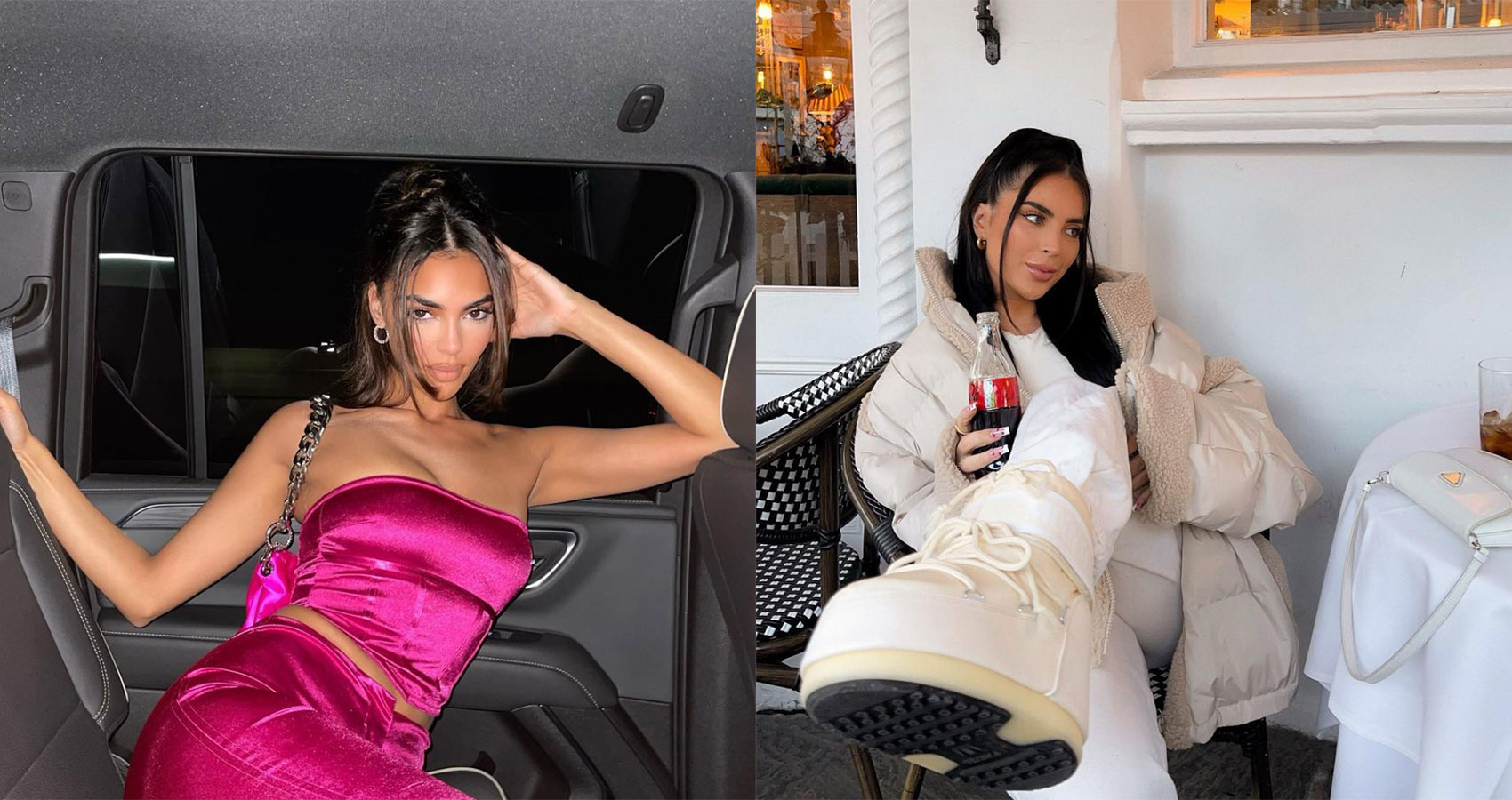
How Your Fashion Choices Can Influence First Impressions On A Date
What your outfit says before you even say hello.
Getting ready for a first date can involve more outfit changes than we'd probably like to admit. Is the dress too much? Are the shoes comfortable enough? Should you go for something casual or make a little more effort? Beyond simply wanting to look good, there's always the question of what your outfit might say about you before you've even had a chance to introduce yourself.
First impressions happen quickly, and clothing plays a part in how we perceive other people. From the fit of a jacket to the shoes someone chooses, small details can influence the qualities we associate with a stranger. Of course, that doesn't mean an outfit tells us everything about a person. But research into fashion and psychology offers some interesting insight into how we form those early impressions.

The First Impression Happens Quickly
In 2006, Princeton psychologists Janine Willis and Alexander Todorov published a study exploring just how quickly we form opinions about other people. Participants were shown photographs of faces for as little as 100 milliseconds before being asked to rate qualities such as trustworthiness, competence, attractiveness and likability.
Interestingly, their quick judgments closely matched those made by people who had been given unlimited time to look at the same faces. Trustworthiness showed the strongest agreement, followed by competence. Giving participants longer to look didn't dramatically change their ratings, although it did make them more confident in their opinions.
There is an important distinction here: the study measured how closely people's judgments agreed, not whether those judgments were actually correct. Still, it highlights how quickly we begin forming impressions of someone. On a first date, clothing becomes part of that initial picture, alongside someone's face, body language and overall appearance.

Why a Well-Fitting Outfit Makes a Difference
Sometimes, the smallest details can have the biggest impact on an outfit. A jacket with the right proportions, trousers that fall perfectly or a shirt that fits properly can make an otherwise simple look feel much more considered.
Research suggests that fit can also influence how other people perceive us. In a 2013 study published in the Journal of Fashion Marketing and Management, researchers Neil Howlett and colleagues at the University of Hertfordshire showed 274 participants photographs of a man wearing either a made-to-measure suit or an off-the-peg version in a similar color and fabric.
The man's face was hidden, allowing participants to focus on his clothing. Those who saw the tailored suit rated him more highly in terms of confidence, success, salary and flexibility. Interestingly, the better fit didn't improve perceptions of trustworthiness.
The findings suggest that tailoring can influence the way an outfit is perceived, even when the overall style and color remain almost identical. You don't necessarily need an expensive designer look for a first date, either. Sometimes, making sure your clothes fit well is enough to make an outfit feel more polished. Qualities often associated with a high value man, such as confidence and success, were among those participants associated with the better-fitting suit.
Does Wearing Red Make You More Attractive?
Red has long been associated with romance, confidence and attraction, so it's hardly surprising that researchers have explored whether wearing the color can influence how attractive someone appears.
A well-known 2008 study by Andrew Elliot and Daniela Niesta, published in the Journal of Personality and Social Psychology, reported that men rated women as more attractive and sexually desirable when they wore red or were pictured against a red background. The researchers conducted five experiments and found that the effect did not appear in women's ratings of other women.
A 2010 follow-up suggested that the effect might also work in the opposite direction. Women in the United States, England, Germany and China rated men more favorably when they were pictured wearing red or framed by the color. In one experiment, women rated a man in a red shirt nearly one point higher in attractiveness than the same man wearing green.
However, the red effect isn't quite as straightforward as those early findings might suggest. In 2016, researcher Leonard Peperkoorn and colleagues reported three unsuccessful attempts to replicate the original results. One study included 206 Dutch men, while another repeated an earlier experiment with a much larger sample of 433 participants. Neither found that red increased attractiveness or sexual desirability.
A 2018 meta-analysis led by Gregory Lehmann, with Elliot as a coauthor, also suggested that the effect was very small and potentially nonexistent.
So, should you wear red on a first date? If you love the color, absolutely. A red dress, top or pair of shoes can make a striking outfit, but there's no strong evidence that the color itself will make someone more attracted to you.

What Your Shoes Might Say About You
Shoes are often one of the last things we think about when putting an outfit together, but they can make a surprisingly strong impression. Whether someone reaches for classic sneakers, polished loafers or a pair of statement heels, footwear adds another layer to their personal style.
A 2012 study by Omri Gillath and colleagues at the University of Kansas explored whether people could make accurate assumptions about someone's personality based on their shoes. The researchers asked 208 participants to photograph the shoes they wore most often and complete questionnaires about themselves. A separate group of 63 students then looked at the shoe photographs and tried to guess details about their owners.
The observers made judgments about personality, attachment style and political affiliation, among other characteristics. They showed some agreement when assessing traits such as conscientiousness, agreeableness, openness and extraversion. Their judgments were more accurate for certain characteristics, including age, gender, income and attachment anxiety.
Of course, this doesn't mean your favorite sneakers reveal your entire personality. But it does suggest that footwear can influence the assumptions people make about us, even when they know nothing else about the person wearing them.
If you're choosing shoes for a first date, there's no need to abandon your usual style in favor of something you think someone else might prefer. A pair that feels comfortable and fits the rest of your outfit will probably do more for your confidence than shoes you can barely walk in.
Dressing for Yourself, Too
Fashion doesn't just influence how other people see us. It can also affect how we feel and behave, which is particularly interesting when getting ready for an occasion that might make us a little nervous.
In a 2012 study by researchers Hajo Adam and Adam Galinsky, participants who wore a white coat described as a doctor's coat performed better on an attention task than those who wore the same coat but were told it belonged to a painter. The researchers suggested that the symbolic meaning attached to the clothing influenced how participants approached the task. This idea became known as enclothed cognition.
Other research has explored similar connections between clothing and behavior. A 2015 study found that formal business clothing was associated with more abstract thinking, while a 2014 study reported that men wearing suits negotiated more profitable deals than those wearing sweatpants.
However, the science isn't entirely settled. Many of these experiments involved relatively small laboratory groups, and a preregistered attempt to replicate the original lab coat findings failed in 2019. The original researchers acknowledged that this raised questions about the strength of their initial result.
Still, the idea that clothing can influence how we feel about ourselves is an interesting one. Putting on an outfit you love might not magically transform your personality, but feeling comfortable and confident in what you're wearing can make getting through those first-date nerves a little easier.

So, What Should You Wear on a First Date?
There isn't a scientific formula for the perfect first-date outfit, and no particular color, shoe or jacket can guarantee a great first impression. Research does suggest that people make quick judgments based on appearance, and that details such as fit and footwear can influence how we perceive one another.
If there's one practical takeaway, it's that you don't need to completely reinvent your wardrobe for a date. Choose something that fits well, feels comfortable and reflects your personal style. Whether that's your favorite jeans and a great jacket or a dress you've been waiting for an excuse to wear, the best outfit is one you feel good in.
After all, the clothes might start the conversation, but what happens next is up to you.










 Connect with Facebook